Signing-Off

I’m overdue to sign-off, at least on weighing-in on Tenderloin matters.  I don’t live in the TL anymore.  I lived in the TL for five years and worked there for six, but I’m not in the hood everyday like before.

I spent most of 2017 traveling. Working with nonprofits in red state USA. Witnessing and learning about a different kind of poverty, much of it rural.  I also visited great world port cities; San Francisco could be one if it ever decides to join the rest of the world.  Saw a refugee camp in Italy, cleaner and more dignified than many of the streets in the Tenderloin/Mid-Market.  Much cleaner in fact.

“Travel makes one modest. You see what a tiny place you occupy in the world.”
Gustave Flaubert

I also caught up on some reading.  Years ago a fellow Turk & Taylor 21 Club bar patron gave me a copy of Richard DeLeon’s “Left Coast City: Progressive Politics in San Francisco, 1975-1991.”  I finally got around to reading it.  I was astonished to read of the affordable housing “crisis” in 1980s and 1990s, and mayoral candidates pledging to solve the homeless “crisis.”

The affordable housing “crisis.”  The homeless “crisis.” Circa 1980s/1990s.  Makes me wonder about our current use of the word “crisis.”  Maybe we should substitute “concern” for “crisis,” given our fairly passive response to both over the years, continuing to this day.  It reminds me of my friends at Hospitality House settling for perennial “add backs.”

The book is a must-read for anyone who wants to understand San Francisco’s extreme bipolar dynamic of pro-growth vs. anti-growth forces, a remarkably simplistic bifurcation of vulgar downtown capitalist interests vs enlightened progressives that remains prominent to this day.  A good argument can be made that both groups have caused significant damage to the city and its people.  Given that the progressive, anti-growth contingent have held sway for the past few decades, they arguably should get the lion’s share of credit for our failure to respond to housing demand and homelessness.

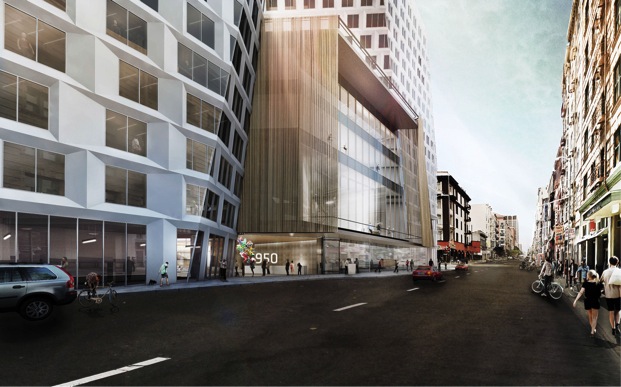
I moved out of the TL after the Magic Theatre and the 950 Market Street project successfully made it through the city’s affordable housing killing entitlement process. The city’s “local control” project approval process was a circus that allowed NIMBY, anti-children and xenophobic spokespersons to run amok.

A few more essays to wrap it up.  I meander, and leave you mostly with questions. And some pictures for fun.  I start with square one: home.

83 McAllister Street

At the intersection of McAllister and Leavenworth is the coolest building in all of the Tenderloin.  It’s racially and culturally diverse.  It’s mixed-income.  The units are small (mine was 250 square feet) but beautifully designed with huge windows so you didn’t feel like you were living in a shoebox.  It was my home for five years.

83 McAllister is an adaptive reuse project designed and developed by Group i.  It was a for-sale project, which made it unusual.  Even more unusual was its economics: all the units were sold below market rate, which was made possible by its creative, minimalist design.  It’s the project that inspired SPUR to create its “Affordable by Design” study group.

It’s also the project that led me to introduce Group i’s founder/president to American Conservatory Theater.  I was introduced to ACT by the mayor’s office, which at the pre-tech-boom time was all over the arts as the way to revitalize mid-Market.   (Larry Harvey called it.)   ACT was desperately looking for an affordable housing solution for their conservatory students (I imagine they still are), and in 83 McAllister I found a designer/developer who offered one creative solution.

Joy Ou, Group i’s visionary Founder/President and Ellen Richard, ACT’s then new Executive Director, became friends and working partners.  Years later they came up with $24 million dollars for the construction of permanently affordable arts space a few blocks away.  Not too shabby, and roughly equal to the annual budgets of the San Francisco Arts Commission and Grants for the Arts combined.  Sadly, the city – including Supervisor Kim – and the San Francisco Foundation, shrugged and squandered the $24 million dollars for permanently affordable arts space and programming for thousands of low-income children and adults.  On a positive note, about a year later Joy & Ellen were joined by Loretta Greco and Jamie Mayer, and the four brilliant women created the deal to build the Magic’s new space on Turk Street.  The new space will be the first new construction mid-Market arts space in decades.

When I heard the Magic was being opposed by a handful of usual-suspect TL xenophobes, I volunteered to move back to help.  I was lucky, my former next door neighbor, Juan, was taking a sabbatical year traveling overseas.  Juan is a SFUSD elementary school teacher.  I didn’t know public school teachers got sabbaticals, but that’s very cool.  The rent had ballooned during my year away and was expensive (for me), but at least all of it went to an elementary school teacher.

I was happy to be back.  My old unit next door was bought by a nurse, Miki.  The Gonzalez Family still lived on the 2nd floor.  Mr. Gonzalez is a hospitality worker at the Hilton on Kearny Street.  He sells handmade Mexican cowboy boots as a side hustle. Another neighbor down the hall waits tables at a restaurant downtown.  The building has Asian, Latino, African-American and white residents.  Young, old.  People who pour coffee and change linens at hotels, and tech workers who write code.  All under the same roof, sharing the same community room, roof deck, laundry room, gym, bike room, mailbox room.

I initially didn’t get the idea of homeownership of apartments in the city, and I would debate this with Joy.  There was just no such thing in East New York Brooklyn, as far as I knew.  Joy argued that homeownership creates wealth for moderate-income households. This seemed farfetched to me, until I rented my unit from an elementary school teacher, with a nurse and hotel worker as my neighbors.

On the importance of farmerbrown

The first time I remember seeing an Asian person, she was standing behind thick, bulletproof glass.  She was taking my food order.  We would place our money in the carousel, she would rotate it, take the money, put the food inside, and rotate it back.  I remember it being on the corner of Rockaway Avenue and Fulton Street, in East New York, Brooklyn.  It was a mom & pop Chinese restaurant.  I remember the parents looked young, and had young children we could see playing behind the glass.  The family always seemed to be there, working superhuman hours.   I never saw them leave at night – it was always very late – but I imagine it was a very nervous affair in one of the country’s most violent neighborhoods.

Before the Chinese family arrived there was only the neighborhood convenience store, at least that was all that was left after we burned down the local supermarket during the NYC blackout of 1977.  I never got to know the Chinese owners, but I remember the mom always had a kind face that neither fatigue nor the haziness of the thick glass could suppress.  It was my first neighborhood restaurant experience, and my family appreciated them being there, especially my mom who sometimes needed a break from cooking.

Years later, in my newly adopted neighborhood across the country, there is farmerbrown.  The moment I walked through its front door, farmerbrown was a revelation to me.  It was a restaurant, but it felt like home.  It sounded like home.  The people looked like home.  The owners were a young brown and black couple.  I came to love farmerbrown; it became a refuge for me whenever I needed a dose of home.  I hosted many of my important meetings with government officials, nonprofit organizations and foundation executives there so we would be surrounded by the spirit of the place, the good vibe and food.  The spiritual world matters, and you could feel it at farmerbrown.  You still can.

I applaud the culinary and creative genius of its founder Jay Foster.  I thank him for creating a refuge and place where all people – particularly people of color – can celebrate the warmth, richness and beauty of a people’s culture when so much outside at Turk & Mason evidenced despair.  And I wish him and his family well in their new endeavor Isla Vida.  It’s a Caribbean joint, so I imagine it will taste and sound and smell even more like home.  Bring on the sofrito brother Jay.  Home is where food and family are.

Saludos,
Elvin

farmerbrown

IMG_3232 (1)
 

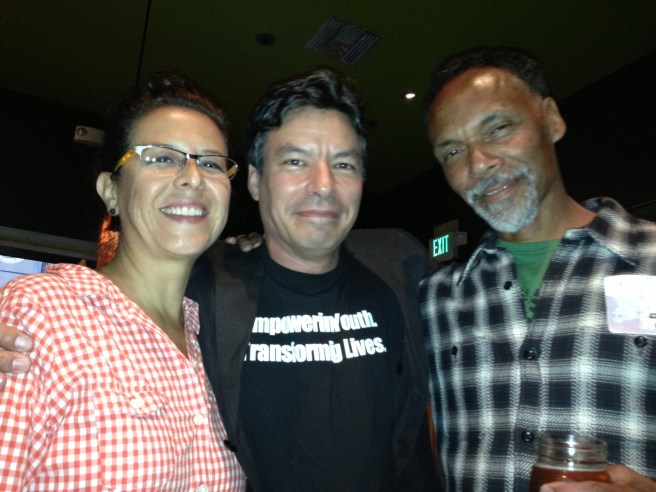
Celebrating @ farmerbrown with two Tenderloin giants who have inspired me: Patricia Zamora of TL Boys & Girls and Darryl Smith of 509 Cultural Center


How Local Control Killed Affordable Housing for Teachers in the Tenderloin; Or, The Parallels of 950 Market Street and SB 827; Or, How an entire community came out to oppose a small arts nonprofit (Except that it didn’t)

The 950 Market Street Project had on-site affordable for-sale units as part of its original program.  The price points were $187,298 for a studio, $209,355 for a one-bedroom and $231,651 for a two-bedroom.  While the number of on-site homeownership would be less than off-site rental — a legitimate disadvantage given the city’s extreme shortage — we would have had a mixed-income project with homes accessible to moderate-income households like, for example, the teachers, nurses and hotel workers at 83 McAllister.

One Tenderloin affordable housing organization argued that the buyers of these on-site affordable units were: “Not our people.”  That’s too bad, in my view, as well as ignorant, intolerant, and xenophobic.  What’s wrong with housing teachers, nurses, hospitality workers and their families?

Cynics critical of nonprofits might say that “Our People” are any they can profit from. The on-site affordable units meant no money for the local nonprofit affordable housing groups, whereas the off-site affordable project will direct millions of dollars into the hands of the groups who objected to affordable housing for nurses, teachers and their families.

But why did we have to choose between on-site and off-site affordable?  A city not hostile to housing development would have found a way to leverage the developer’s investment of $370 million so we could have achieved both, not to mention more permanently affordable arts space.  New York City, for example, would have leveraged the developer’s project with 33% more buildable space in exchange for more affordable units (or arts space).

Why don’t we leverage to build more affordable units in San Francisco?  It’s my understanding Home-SF, championed by Supervisor Katy Tang, is an attempt to do so. That program was not in place yet for 950, though it would not have mattered if it was. The director of a local housing clinic, Randy Shaw, threatened to sue the project if it went over the zoned height limit, regardless if the height/density bonus produced additional affordable housing units.  This limited the project to be consistent with the height of the Warfield Theatre and other structures built for a city that existed one hundred years ago.

This struck me as odd: A reputed champion of affordable housing — or at least affordable 8×10 rooms — threatening to sue a project or put it on a ballot, despite the creation of more affordable housing.  But, as I later learned, Mr. Shaw was also a champion of local downzoning, and protecting downzoning is endemic to historic preservation advocates in San Francisco.  It’s no secret that historic preservation is often a major deterrent to the development of affordable housing.

I also wondered: Who would pay for Mr. Shaw’s lawsuit against the project?  As the housing clinic is a publicly-funded organization, presumably you and I would pay for the lawsuit, which meant we the people would be lobbying against affordable housing production.  Ironic.

Image result for 950 market street san francisco ca

Richard DeLeon’s “Left Coast City: Progressive Politics in San Francisco, 1975-1991.” and Kim-Mai Cutler’s fascinating “How Burrowing Owls Lead To Vomiting Anarchists (Or SF’s Housing Crisis Explained)” are both excellent resources for understanding this dynamic.

My takeaway from reading DeLeon, Cutler, and following local housing news: If faced with the choice to build more affordable housing/more affordable program space by building taller and denser, most politically active San Franciscans will oppose the affordable housing/space.  This stems from a) a long-standing fear of the city becoming the long-dreaded west coast Manhattan, and b) most San Franciscans are housing secure, and care more about potential threats (more people) — real or perceived — to their existing housing and charming village-like lifestyle.

Both of these concerns are understandable. It’s certainly true, in my view, that an entire cityscape of truly awful high-rises went up during the downtown building boom era, so fears of destroying what’s left of the city’s beauty are reasonable from that perspective.  And the downzoning of the Tenderloin protected many low-income people, or at least the buildings they lived in.  But that was true a generation ago; now, in 2018, it resulted in a stunted project that could have created over a hundred more units of housing, or 40,000 square feet of permanently affordable arts program space, or some combination of both.

It’s unfortunate our choice seems limited to historic preservation of a 19th century fishing village or high-rise Manhattan.  At least that’s how it often plays out in our discourses.

Local control, in the case of the Tenderloin/Mid-Market, has exacerbated polarization. Supervisor Kim’s local control method awards powerful nonprofits at the expense of the small and weak. The Kim method awards politicians that profit, figuratively and literally, from securing favors, financial and political, from whomever wins the face-offs. And vice-versa.

More specifically, in 950, local control resulted in the arts, youth development, affordable housing, a pair of fraudulent individuals demanding five million dollars, and social services all squaring off.  I was involved because of my years of work with the local youth and arts organizations.  The only reason the arts and youth development — two historically disenfranchised Tenderloin constituencies — were at the table at all was because the developer, who had strong community ties, insisted they be included.  The housing clinic went so far as to try to dissuade the youth groups from talking to the developer.  A “950 Coalition” consisting of a couple of guys who are regulars at all Tenderloin meetings purported to speak for the entire neighborhood.  There wasn’t an Asian, Latino, African-American, Yemenese, or any youth in sight; in a group claiming to represent the Tenderloin. Supervisor Kim’s leadership seemed to consist of gauging which group offered her the highest potential political dividend – including the fraudulent extortionists, who were “connected” to voters and money she wanted.

Is this what we want?  Pay-to-Play is as old as politics certainly, and likely all the mayoral candidates do it, but what I witnessed with Supervisor Kim’s opportunistic handling of the 950 Project was especially disturbing.

Here’s another specific example.  At one point during the entitlement process, the housing clinic spearheaded an attempt to eliminate a small arts nonprofit from the community space.  A “community organizer” even authored a letter to this effect, signed “All the Residents and Staff of the Housing Clinic, TNDC, and Hospitality House.”  This claim, of course, was a complete farce, and one of the most glaring examples of misrepresentation of a community I have ever seen.  Fortunately the developer didn’t surrender and abandon their partnership with the nonprofit arts organization.

These local skirmishes are arguably small stuff.  In the end, what truly mattered was that city hall was off the hook.  It was under no pressure to leverage private sector investment.  San Francisco is matching the 950 Market Street developer’s 370 million dollars with zero.  Zero.  In one of the richest cities on the planet: zero.  In an area that has suffered from disinvestment for decades and whose people have endured an astronomically high rate of concentrated extreme poverty, San Francisco offers zero.  We should have had both on-site and off-site affordable housing, and/or a permanently affordable space for arts education and human development.

Years ago I told the 5 Blocks documentary crew that San Francisco doesn’t know how to do development. I was wrong: it’s not that we don’t know how, it’s that we don’t want to.  Perhaps we should just be honest and openly say we accept this to avoid the alternative: Building housing for more people we don’t want coming to the city.

From my own experience, low and moderate income people don’t care about more density or more height; they would accept both in a heartbeat in exchange for a more affordable city.  They also don’t care about all the historic plaques; they’d trade a thousand of them to have their own toilet.  But they’re not very politically active, mostly because they’re too busy with the struggles of daily life.  Their spokespersons, unfortunately, routinely misrepresent their views and interests.

Community Benefit Agreements produce tangible and positive benefits.  But they are fundamentally limiting, favor the powerful — sometimes powerful nonprofits can be what disenfranchises a community — and give the city a free pass when it should be matching developers investments with real resources, financial and otherwise.  CBAs should complement, not supersede, the city’s match.  If we had a city match to what the city has made off the tech boom, we would have a far more equitable landscape.  But the city kicked up its heels while we settled instead for elbowing each other for Community Benefit Agreements and demonstrations in front of Google buses.  Clearly, the passengers of those buses are “Not our people.”  As it turns out, neither are their teachers or nurses.

Have you been to Marfa?

Have you been to Marfa?

Marfa is a small town in the high desert in West Texas. Population around 1800. It’s an arts destination. Marfa’s in Presidio County, one of the poorest counties in the United States.

IMG_7446.jpg

Sustainable Energy

Marfa has one traffic signal that blinks. At least that’s all I remember seeing.  If you go you must visit Marfa Burritos.  Fantastic.  It’s Ramona’s joint. As you leave, Ramona will say farewell with a cheerful “Adios Guapos!”  I went there for breakfast and lunch, and would have gone for dinner if it was still open.  Anthony Bourdain was there while we were visiting.  We talked about Puerto Rico a bit.  He said: I got lots of love for Puerto Rico.  Bourdain ordered the asado.  I went for the egg & chorizo. You can’t go wrong either way.

IMG_7453 (1).jpg

Be sure to stop here.

IMG_7457.jpg

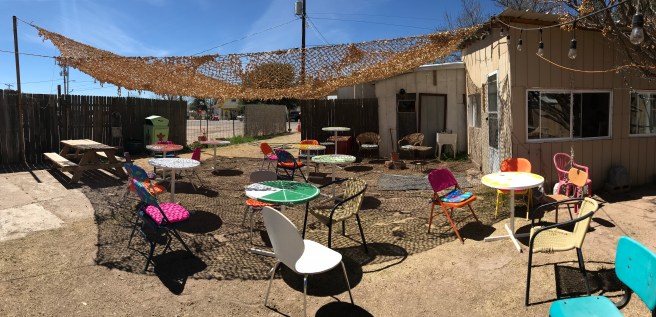
Outdoor dining @ Marfa Burrito

marfa-burritos-2_2000x1500.jpg

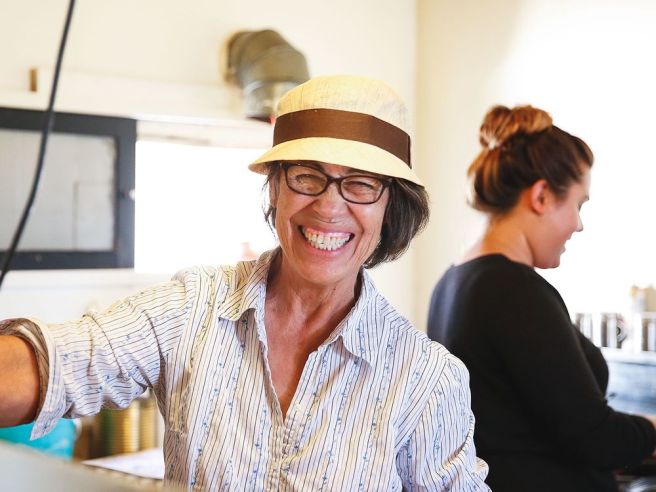
Ramona: she’s always happy to see you.

Some of my closest friends here in SF don’t want any more development. Or they wonder if the city’s built-out.  Yet they’re both involved in facilities development projects for permanently affordable arts space.  Arts people.  They’re brilliant, inspiring to me.  They save lives, including mine.   The whole thing with money and architects and engineers and developers and construction – i.e. development – is hard, but it’s what we have to do if we want affordable living or work space.  Unless we lived in Marfa.  My friends grew up in the city or have been in the city for decades.  One of my friends hates this guy Ron Conway; she blames him for the affordable housing crisis.  Another wonders: Is there a point where the city is full?  The specter of Manhattan looms.

My California cycling legend buddy Tony Tom grew up at Jones and Broadway. He remembers doing wheelies in the middle of the street.  He said he could do that because no cars would pass by, back in the day.

IMG_4534(1).JPG

Tony with his daughters.  Tony owns the coolest bike shop anywhere: A Bicycle Odyssey in Sausalito. 

I suppose I always thought of cities as ever-evolving cauldrons of people, economies, cultures, civilizations.  I never considered the prospect of a static city until I moved to San Francisco and learned of its deeply conservative, anti-city ethos.

I look at much of San Francisco, with its landscape of one and two-story buildings within minutes walk of major public transit stations, and I don’t get the references to Manhattan.  Not even Queens or Brooklyn for that matter.   My friends are probably talking about the giant, blunt force redevelopment projects like the Embarcadero Center and Yerba Buena.   I can see how those projects left a long, traumatic, residual stream of anti-development sentiments in their wake.

I don’t know Ron Conway; maybe he’s an asshole.  I saw he is a major contributor to anti-gun violence efforts; that impresses me as a very good thing.  Either way, it’s arguably better to build affordable space than to endlessly fixate on one asshole or one benefactor.  So I’m happy for my arts friends’ real estate development projects.

On the other hand, what if Jeff Bezos chooses Marfa for HQ2?  If I were a Marfa resident, I’d be all over opposing that.

Chillin’ with the Original Burning Man

Sad to hear of Larry’s passing today.  He had a kind spirit.  I wrote this a couple of years back.

Chillin’ with the Original Burning Man on the Luggage Store Gallery Rooftop

I know it’s impossible for natives to believe this but I didn’t know what Burning Man was when I arrived in the Tenderloin in 2009.  The mayor’s office certainly knew who they were, and they knew Burning Man had recently created the Black Rock Arts Foundation.  “Burning Man is loaded!” the mayor’s staff said.  “They can revitalize mid-Market!”

Larry Harvey, Burning Man’s founder, is an inquisitive, super smart guy with a friendly spirit.  He and his colleagues were weighing the prospect of settling their headquarters in mid-Market.  Larry was moving forward cautiously with eyes wide open under his famous Stetson hat.  One late afternoon on the rooftop at 1007 Market Street, the home of the iconic Luggage Store Gallery, we chatted and looked out at the intersection of 6th & Market, one of the most fascinating intersections of any city anywhere.

I sensed the hesitancy about moving to the area.   I think one of Larry’s concerns was whether Burning Man would be perceived as an interloper.   I remember offering him my two cents: “You see that intersection down there?  That is a great city meeting place for all.  It belongs to no one; it belongs to everyone.  If you come it will belong to you just like it belongs to everyone else.”

While moving to the area was a question mark, Larry was clear on his view of city hall’s mid-Market arts district plans.  He told me: “They will let us furry animals out for a while, and then when they don’t need us anymore they will put us back in our cages.”  (Easily one of the more memorable observations during my five years in the TL.)

With that we walked back to the death-defying ladder leading from the roof down to the third floor rear window at the Luggage Store Gallery.   I don’t know what ultimately led Burning Man to move to the neighborhood or what led them to leave.  I do know that, not long after, the city proved Larry Harvey’s Little Furry Animals Theory right.

Supervisor/mayoral candidate Jane Kim Deletes Arts Funding & Opposes Affordable Housing for Artists

Below are Supervisor Kim’s deletions of various arts initiatives in Mayor Ed Lee’s October 2011 draft plan for Central Market.   As is clear, Supervisor Kim opposed the mayor’s office creating – or even exploring – new funding resources for the arts, arts facilities, and affordable housing for low-income artists (even privately funded).  Catalytic community arts projects are not “a priority.”

These edits demonstrate an entirely different position on the arts than what Supervisor Kim has communicated publicly.

Supervisor Kim’s deletions of Mayor Ed Lee’s plan:

  • Create a mini-grant program to fund artists and arts organizations that will implement this type of programming.
  • Create incentives for developers and property owners to develop and maintain facilities for arts organizations and uses.
  • Support privately-funded development of housing that includes live/work housing for low-income artists that engage the local community.
  • Provide support to catalytic commercial and housing development projects—including arts and culture establishments as stand-alone or mixed-use projects—that transform large portions of vacant property.


Generating New Dollars

City tosses beleaguered nonprofits $4.5 million. That was the headline on the front page of June’s edition of Central City Extra, our community newspaper. In response to this temporary-fix measure, Brien Cheu, director of community development at the Mayor’s Office of Community and Housing Development, was quoted as saying:

Is it possible, if we came up with some creative financing, to create a substantial, multitenant space, along commercial corridors where transportation is easy, especially by low-income individuals? Rather than focus on rent subsidies we want to create as many structural fixes as we can, so we’re not back here in another five years.

Well, Mr. Cheu, many of us in the Tenderloin and arts community have been wondering the same for years now. In fact, if we approached you with an opportunity to build exactly such a multitenant space for several cherished arts and education groups along a very prominent commercial corridor with very easy public transit access, what kinds of creative financing might you have in mind?

In the article Supervisor London Breed noted that the ADA-compliance work needed at the African American Cultural Center on Fulton could alone absorb nearly the entire $2 million of the allocation earmarked for the arts. The same could be said for work needed to get CounterPulse up and running at 80 Turk, or the Luggage Store Gallery on Market. I know LINES Ballet was absolutely thrilled just to get hot water heaters installed; my goodness maybe we can do better by one of the world’s most renowned dance companies in our own hometown. There are many examples.

Still, the appropriation is a start. Two years ago, over twenty community-based arts, education, service organizations (and one affordable housing developer!) signed a letter requesting that the city capitalize on the boom in property taxes and create a fund to reinvest in the neighborhood for long-term structural stabilization solutions. We got a “no,” with the rationale being improving the neighborhood would gentrify it.   Ironically, our failure to be creative, as Mr. Cheu is now calling for, left us in a weakened position to respond to the displacement of nonprofits resulting in the very gentrification those advocates who opposed creative public measures claimed they were concerned about. A self-defeating, self-fulfilling prophecy.

City Hall was for a local “capture and reinvest the property tax boom” mechanism before it was against it. In spring, 2012, at a breakfast hosted by farmerbrown, Mayor Ed Lee addressed a prominent group of Tenderloin/mid-Market arts & education stakeholders and local foundations and announced he would get behind the formation of a local property tax capture district to invest in neighborhood projects.

From the March 27th, 2012 memo the Office of Economic and Workforce Development staff prepared for the Mayor to prep him for the breakfast:

NOMNIC’s Board feels very strongly that for complicated, ambitious projects like 950 Market and others to come to fruition, the City needs to find a financing source.  Your Central Market Economic Strategy agrees and calls for the pursuit of an Infrastructure Finance District (IFD).  IFDs would arguably be an achievable city funding strategy given its utilization would help underwrite the development of cultural/educational facilities at 950 Market, the Strand and Market Street Cinema.  NOMNIC is also looking into other finance mechanisms such as a cultural/educational facilities bond to take on mid-Markets derelict properties.

A blast from the not-too-distant past! At that time my old crew NOMNIC (better known as the Tenderloin Economic development Project) and I were fighting to make 950 Center for the Arts happen and were also advocating for repurposing other major derelict assets like the Market Street Cinema, Crazy Horse and the Strand.   We envisioned a multi-tenant 950 Center for Arts & Education, a new landmark home for the beloved Alonzo King LINES Ballet Dance Center up the block, and a mid-Market destination for the annual SF international film festival at the new home of the San Francisco Film Society. (Initially very skeptical, SFFS’s visionary Graham Leggat was warming up to mid-Market before he tragically passed.)

The mayor hasn’t acted on the finance district yet. Word is some in city hall got concerned about communities all through the city wanting their own tax districts, creating a chaotic situation for the city. Also, some key local affordable housing developers declined to support it because there wasn’t money for new construction affordable housing through the readily available post-redevelopment tax capture mechanism (IFD).

While we haven’t heard from the mayor again and his staff is now reportedly hostile to reinvesting local tax dollars in the Tenderloin, Supervisor Kim took initiative to create a fund based on property tax revenues so the precedent has been set. Maybe we don’t need to form a district after all and can just add more to Supervisor Kim’s recently created fund. We can call it the “After Decades of Neglect, Exploitation, and Extreme Socio-Economic Segregation We’re Going to Reinvest the Gains from the Tech-Fueled Real Estate Boom for the Benefit of Equitable Development for Tenderloin Residents. Fund. (Forgot the F word.)

And, also very encouraging, director Brian Cheu is calling on city hall to get creative. So maybe the door is still open. Maybe there’s still time.   I of course have to think so with so much at stake. If not, let’s at least have the integrity to be straight-up with our arts community and tell them we’re cool with their moving elsewhere if they can’t make it in San Francisco. Unless, of course, that would result in big empty dark spaces on Van Ness, in which case we might finally get inspired and float a bond measure for the arts.

Sly and Family Stone Approve 1028 Market Street Project

It was a unanimous vote by the Planning Commission.  Congrats to Craig Young and ilana Lipset!  The public comments were across the board positive, though there was one from an undefined mid-Market “coalition” that expressed concern about the risk of “psychological displacement” as higher-income residents move into the neighborhood.

Psychological displacement.  I’m guessing this means that the Tenderloin’s poor, living in protected rooms/housing, will look at the new people moving in – their new apartments with toilets and fire sprinklers, the businesses that cater to them (the Black Cats, the Biigs), maybe the clothes they wear – and feel an immediate need for psychological counseling services?

This, by the way, is a primary reason why the arts are so important.  We want a level playing field to counteract “psychological displacement?”   Then we should invest heavily in arts facilities, public markets, playgrounds, rec centers where we all can meet, break bread, and share these fundamental human experiences regardless of our backgrounds.

Here’s my admittedly non-scientific take on the situation.  Nice people who have money will move into both 1028 and 950.  They will be neighbors and interact with the Tenderloin’s nice people who have little or no-money.   Have money, have little money, have no money – we will all be nice people together.  Of course, there are low-income, middle-income and high-income people that are jerks, but we’ll deal with them.   There will be a yellow one that won’t accept the black one, that won’t accept the red one that won’t accept the white one.  And different strokes for different folks.  And so on and so on and scooby dooby dooby.

As a simple guiding principal I propose: New or long-term resident, rich or poor, you respect the Tenderloin – and its residents – or you need to leave.

Poor people are not necessarily helpless people.  Quite the contrary; in the Tenderloin you will find some of the strongest people you’ve ever met.  No psychological counseling necessary, though moving toward a healthier, more integrated community, sharing the same stuff everybody needs, would be nice.  Time for the champions of segregation to step aside.  We’re all Everyday People.  Oh sha sha.  We got to live together.

21 Club Reunion

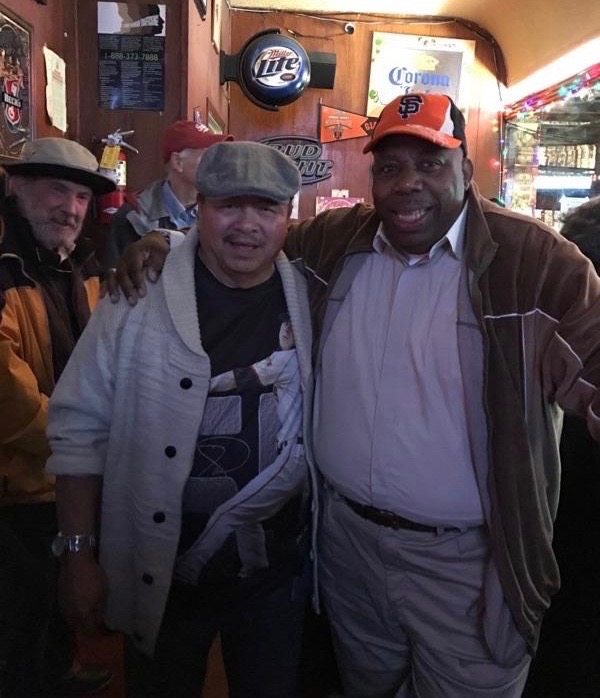
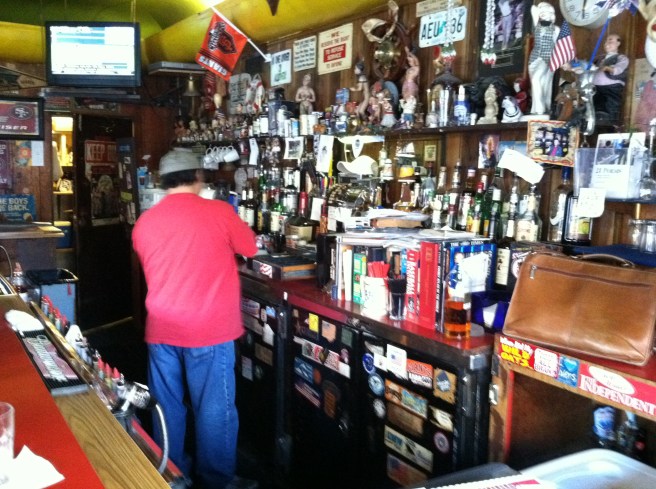
Frankie, Veronica, George, John, Cookie, and of course Joanne of Jonell’s at Ellis & Jones. Many other Tenderloin old timers and residents.    The problem-bar-that-had-to-be-shut-down crowd.  Happy.  Hugging each other.  Celebrating.  The powerful and positive life-energy of the 100K+ Women’s March was palpable everywhere in the Tenderloin as the crowds streamed into the neighborhood afterward.  It was fitting to host the reunion at Jonell’s on that evening: Jonell’s run by three women who have been in the Tenderloin for ages and are not to be messed with.

IMG_4789.JPG

21 Club icon Frankie (left) and Chef George @ Jonell’s.  Old TL theater stage hand John photobombing.

A lot of the old 21 Club crowd has since moved over to Aunt Charlie’s across the street.  I’ve moved over with them.  Aunt Charlie’s has the same “All are Welcome” vibe that Frankie’s place always had.  Joe and Barry, the barkeeps, have been there for decades. José and ninety-plus year old Bob, who has travelled the world, have been there for a mere 14 years or so.

That’s what I loved about Frankie’s.  It didn’t matter who you were, whether you had money or not, lived in a SRO or Pacific Heights mansion.  Your race, whether you did time (so long as there was no violence), who you slept with, none of that mattered.  (It helped if you were a Giants fan though.)

During 21’s last few years the corner @ Turk & Taylor got really rough.  Lots of drug trafficking and violence, culminating the night when eight people were shot outside. Frankie himself was a non-escalation Buddha master.  He had a disarming way with people.  The girls selling crack outside would come in sometimes to use the bathroom, but they never disrespected the place by trying to conduct business there.  Frankie was easy with people and loved by everyone.  He would only get irritated when the press reported shootings at the 21 that actually took place outside on the corner.

The new watering holes in the Tenderloin – the Black Cats, the Biig and the like – are fancy joints.  I’ve walked by a couple of times and have seen zero Tenderloin residents hanging out.  They’re “Uptown” establishments whereas 21 was, and Jonell’s and Aunt Charlie’s are, definitively Downtown.

Biig now occupies 21 Club’s notorious old corner.  They discuss seasonal drink concepts with patrons.  I don’t understand what’s so complicated: haven’t they heard of scotch?

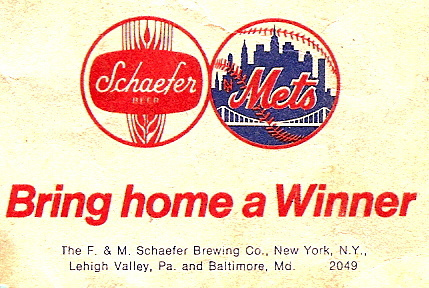
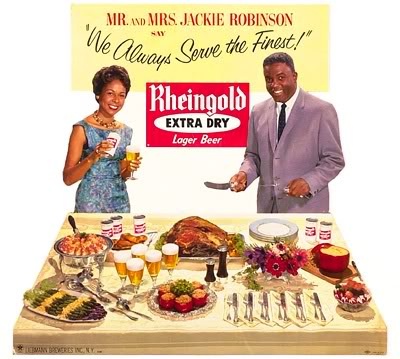
I’m just kidding, I’ve had one wee dram too many, courtesy of two dear friends of mine.  I shouldn’t be a snob or hater, there’s way too much of that going around.   I have my own nostalgic inclinations that can lead to ignorance and intolerance for others. I’ll save up and stop by for a seasonal drink consultation one of these days, though I can imagine pops in heaven looking down at me and having a good laugh.   Pops, and Brooklyn/Queens Mets fans (after losing their beloved Dodgers), were Schaefer or Rheingold Extra Dry people.  (You don’t even want to talk about the Yankees.)   I remember driving by Schaefer’s giant plant each day on the way to the factory in Greenpoint.

schaefer-mets-ad.jpg 4ff3e112631d0032c8f6de24ed6487b8.jpg

In the meantime, see you all at Aunt Charlie’s.  I don’t care what the plaques say – it’s in Downtown Tenderloin, and we don’t need the federal government to tell us where we are, who we are, or how important we are.

Forty-two years at Turk & Taylor.  Bon voyage Frankie.

B518C5C0-19E6-41B1-9EF5-5BFA6F40EE65.JPG


Supervisor Kim’s Ridiculous Comparison of the Tenderloin to Chinatown; The Fires of East New York; Commercial Gentrification of the Tenderloin

Vallejo Bogeyman

“Elvin!  If it weren’t for the Tenderloin all these people would be living in Vallejo!”

A flash-argument broke out while chowing on some slammin’ phở at Turtle Tower on Larkin.   Supervisor Kim had me at a disadvantage: I didn’t know where Vallejo was.  I could only wonder: Do the apartments there have toilets?

“The city exploits the Tenderloin,” I responded, “to avoid paying for quality affordable housing.  There are numerous quality SROs, but much of the housing is substandard, if it can be considered “housing” at all.   Are you saying there’s no such thing as substandard housing in the Tenderloin?”

“No, there is not.”

And with that the brief argument ended as quickly as it began.   There’s no debating with someone who thinks all the 8 x 10 rooms without toilets or sprinklers qualify as decent housing.  Different, and ironic, world views I suppose: one’s money Upper East Side Manhattan and one’s no-money East New York Brooklyn.   One prioritizes place over people, often accompanied by the argument that we can’t provide any better.   The other prioritizes people over place, and wants to force us to provide better.

I’ve heard similar arguments on numerous occasions from various progressive friends: the Tenderloin is the last affordable neighborhood downtown is a common refrain.  This always mentioned geographic factor overrides all other considerations, like healthy living conditions and environment.  It makes me wonder what’s the great privilege in living downtown that the city would concentrate poverty so intensely – is it so we can be close to Macy’s?

Displacement in East New York Brooklyn

I can understand the emotional attachment to place at any cost.  I grew up in a no heat or hot water, rodent and roaches infested apartment in East New York Brooklyn, one of the most violence-plagued neighborhoods in the country.  Each night before I went to sleep I would rehearse in my mind the emergency evacuation sequence in case we woke up to one of the fires burning down the buildings all around us:  I’d jump down from the top bunk, open the window, grab my kid brother, and climb out onto the awning over the convenience store beneath us.  Then we would slide down onto the safety of the sidewalk below.  I used to worry about the fall from the awning to the sidewalk, but always concluded that a broken leg would be better than burning to death.

Fires, gunfights, chains, bricks, bottles, knifes, gangs, heroin, bodies, human feces, needles.  Fear was omnipresent.  As a kid leaving in the morning on the way to school I would routinely have to step over someone to get out the front door downstairs (or jump, if there was more than one body).  Coming home at the end of school, I remember wondering if there was someone waiting to assault me in the stairwell upstairs.  I would start talking out-loud, in the deepest voices I could muster, with a make-believe companion to scare away would-be assailants.  Strength in imaginary numbers.

But there was also Thanksgiving dinner, Christmas tree and presents, visits from kings on el Día de Los Reyes, weekend mornings café con leche, rolling Matchbox cars on the crooked floor, making fun of my sisters as they sat under the hair dryer with their rollers, mami’s awesome pollo guisado con arroz blanco y tostones, watching the Mets on Channel 9 with pops (the best), my brother and I celebrating when pops’ car got stolen and he would stay home, and music, always music: Tito, Celia, Hector, Willie.  In all this there was a lot of love and happiness, and the nightmare around us was kept at bay.

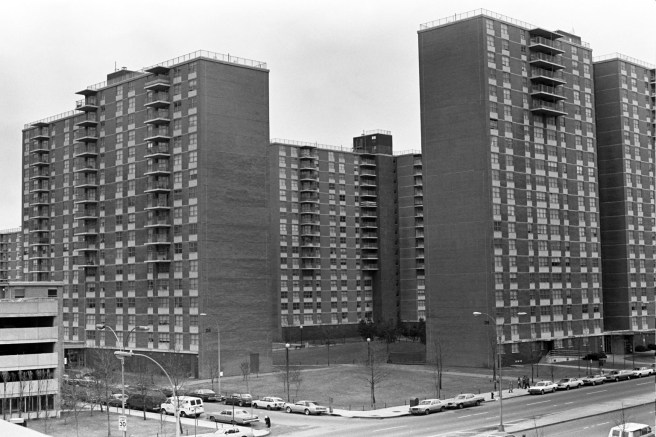
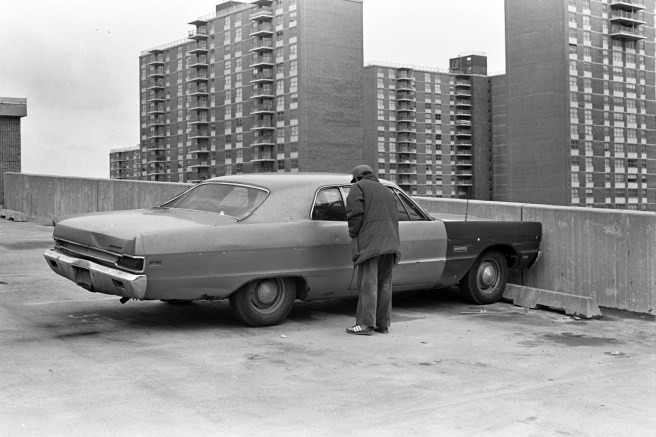
So, when our place got condemned by the city as “Unfit for Human Habitation,” I felt a powerful sense of loss.  Our place was dangerous and substandard, but it was home.   We moved to a gigantic Section 8 project – Starrett City, the biggest in the country – built on a former landfill on the outskirts of East New York and Canarsie.  Our high-rise apartment had heat, hot water, the toilets flushed, there was grass out front – real grass! – walking paths, and handball courts free of feces and needles.  There were no roaches or rodents; no bodies to step over or assailants waiting at the top of the stairwell. No smell of burned-down buildings.   In short, it was heaven.  The old corner of Rockaway Avenue and Fulton Street vs. the new apartment in Starrett City was no contest.

Autosave-File vom d-lab2/3 der AgfaPhoto GmbH

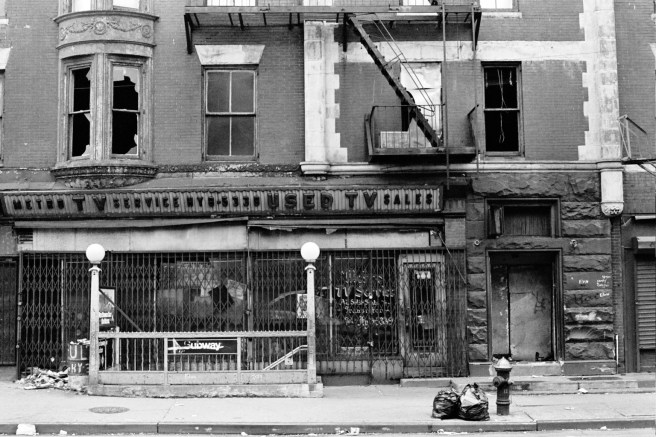
Home, above the TV repair shop, after condemnation by the city.  That fire escape was my great outdoors.


Autosave-File vom d-lab2/3 der AgfaPhoto GmbH

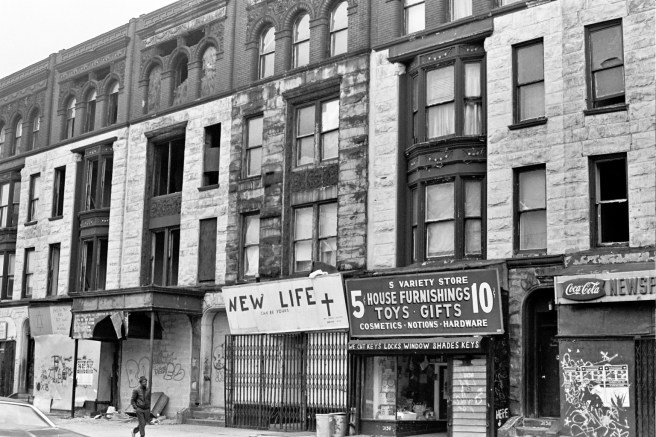
My favorite toy shop around the corner on Fulton Street.  That window above the Coca-Cola sign is where my brother and I would escape the fire we always waited for.


Autosave-File vom d-lab2/3 der AgfaPhoto GmbH

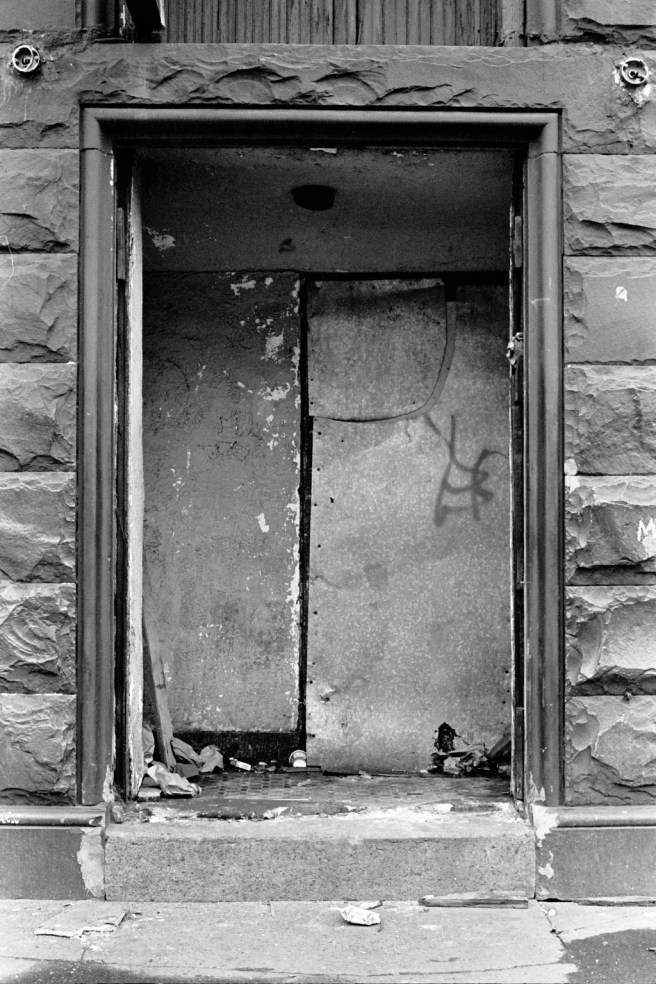
The vestibule where we had to step or jump over bodies on our way to school.


Autosave-File vom d-lab2/3 der AgfaPhoto GmbH

Take the A train! The subway right below us, we could tell whether it was the C Local or A Express by the way the apartment shook.


Autosave-File vom d-lab2/3 der AgfaPhoto GmbH

Starrett City. That’s real grass!


Autosave-File vom d-lab2/3 der AgfaPhoto GmbH

Pops and his Plymouth Fury III. A monster V-8 with huge torque steer, I learned to drive in that car around the factory in Greenpoint without killing anybody.


I hear rumblings now of gentrification coming to East New York, which has always been considered impossible.  From what I’ve read the neighborhood needs to go up to keep costs down, and that is a cultural problem for a place characterized by old 4 story walk-ups.   Mayor de Blasio has proposed a major upzoning of East New York to add more affordable housing.  Rebuilding East New York, like my old building that was constructed in 1910, would introduce over a thousand new affordable units, but would it still be East New York?  Activists and preservationists are opposing upzoning/new development while offering in return nostalgia for the old days and the myth of a neighborhood that will be affordable in perpetuity.  Today’s protectionism laying the foundation for tomorrow’s displacement.

But maybe I’m calling balls and strikes from 3000 miles away; even worse than what Bay Area progressives do to the Tenderloin.   Best I shut up before my old ENY homies come find me at farmerbrown’s and bust me upside the head.

Segregation and the Intense Concentration of Poverty in the Tenderloin

I’ve heard Supervisor Kim say on a couple of occasions the goal is to make the TL a stable low-income community like Chinatown.   I don’t know if Chinatown is a stable low-income community, but in this we are in agreement.  It will be impossible, however, for the Tenderloin to achieve this socioeconomic equilibrium until the Department of Public Health (DPH) and Human Services Agency (HSA) treat the Tenderloin and Chinatown on equal terms, and on this measure we’re not remotely close.

This, of course, would require an advocacy that does not exist in the Tenderloin.  Unlike Chinatown, without DPH and HSA programs, many Tenderloin SROs would be economically obsolete and sit empty.   And if our goal is historic preservation of buildings at any cost – even at the cost of constructing new high-quality affordable housing – then we won’t push back against DPH or HSA.  Our policy is poor people – or, more specifically, the government funding they bring with them – in the service of buildings, rather than the other way around.

If President Obama and HUD argue that neighborhood poverty at or over 40% constitutes “Extreme Poverty” and segregation hurtful to poor people, why are they funding a city with placement programs that far exceed that number in the Tenderloin?  (Mere “High Poverty,” by the way, is considered 20% or higher.)  In the Tenderloin, and adjacent blocks in mid-Market, the number exceeds 90%.  Indeed, given all the literature dating back to William Julius Wilson, the War on Poverty and the more recent research on Social Determinants of Public Health from major public health foundations, a strong argument can be made that the worst offenders to the public health interest of the Tenderloin’s poor have been the San Francisco Department of Public Health and the Human Services Agency.

Since Supervisor Kim’s office tried to prevent DPH and HSA statistics from being made public (see Housing, page 24) it’s no surprise she would not challenge this strikingly inequitable status quo that renders her comparison to stable low-income Chinatown completely absurd.   How would she challenge DPH and HSA? – by telling them to take their bean-counting bureaucratic boots off the neck of the Tenderloin.  The Tenderloin doesn’t belong to city hall to exploit.  (Though through its Master Lease Program, much of the Tenderloin is de-facto controlled and exploited by the city; effectively privatized public housing, without the toilets.)  Or, if parity with Chinatown is truly Kim’s goal, she could tell DPH and HSA to apply the same placement practices to both.

Who’s Afraid of the Black Cat? 

Now that I’m back in the neighborhood I’m noticing what appears to be a conversion of SRO hotels back to tourist hotels.  Heretofore illegal but now going unchallenged (perhaps the new owners have the right connections to avoid legal action being taken against them), it will be interesting to see if and how this trend continues, and the impact it will have on the city’s 90%+ placement number.  If the result is more income-diversity, local spending on small businesses and a drop in the concentration of poverty, this would be a good development for the Tenderloin’s poor.  Maybe we can get the placement percentage down to a mere, say, 45%; that still qualifies as egregious, unhealthy segregation per government and public health policies, but would still be far less oppressive for the Tenderloin’s poor.

How about Tenderloin low/moderate income entrepreneurs?  The conversion back to hotels, if this is indeed happening, could be a benefit or threat.  Many low/moderate income entrepreneurs took a giant hit and went out of business years ago when hotels converted to 100% residential; hundreds of low-cost lodging rooms that catered to low-income travelers were lost.  These low/moderate income travelers patronized the Tenderloin’s small businesses.   Maybe some of these travelers will come back now as a result of these conversions.  Or perhaps we’ll see another wave of extinction as more mom & pop New Star Chinese restaurants and Lafayette Coffee Shops give way to sleek and high-end Black Cat “Uptown” establishments.

Ideally, the extensive inventory of ground floor commercial space owned and/or controlled by nonprofits can be made available at below market-rate rents to displaced low/moderate income entrepreneurs.  That can be tricky, however, as some affordable housing developers don’t see providing affordable commercial space as part of their mission (not unless they’re subsidized for it, like they are for residential units). Hopefully the Tenderloin Neighborhood Development Corporation (TNDC) will, given that the organization’s name suggests a holistic focus above and beyond affordable housing. (Perhaps TNDC’s opposition to public funding for neighborhood-serving facilities and improvements was an aberration.)  Between TNDC, the Tenderloin Housing Clinic, Mercy Housing, Community Housing Partnership and Chinatown Community Development Corporation, there’s plenty of commercial space that arguably should be protected.  Will they help?

Back to the quiet conversions – like the Warfield Hotel at Turk & Taylor for example, or the Adrian Hotel on Hyde – the historic preservationists at the Tenderloin Housing Clinic must be happy. Whether facilitated by poor people’s or tourists’ money, the buildings remain intact and the gentry are visiting.  A return to the glory Uptown days of yesteryear.   They’re drinking Champagne at the new high-end bars after indulging at the new luxury spas, i.e. the kind of community serving retail the Tenderloin Housing Clinic advocates for in Community Benefit Agreements with market-rate real estate developers.  The socioeconomic chasm between rich and poor in the Tenderloin may be worse than ever, but the party is on.

lee-black-cat

Mayor Ed Lee getting himself some Uptown.  The decades old Chinese family restaurant is out.


blackcat_022

Community-serving Uptown Champagne and Caviar are in.


I’ve heard concerns from Southeast Asian community activists (all API children of refugees, none progressives) that hotel landlords have been harassed to evict Southeast Asian moms & pops to make way for the Uptown Black Cats.  But I don’t buy that: Taking poor people’s Supplemental Security Income to keep the 8×10 rooms/one-sprinkler-per-floor buildings economically viable, while squeezing out low/moderate income moms & pops on the ground floors to make room for Champagne and caviar joints more befitting the Uptown profile, would constitute the most insidious and disgusting example of poor people exploitation and gentrification ever witnessed.   Besides, I’m sure HUD and/or HHS would have investigated.

Maybe once upon a time it was about protecting poor folks, but at some point the focus in the Tenderloin turned a corner and became principally about protecting nostalgia, not the people.  I know from experience the vast majority of poor folks in the Tenderloin care little, if at all, about the history stuff or plaques; they’re just fighting to get through the day.   If it were about the people, we would not accept the extreme concentration of poverty.  And we would go up, give them better housing, fire sprinklers, and maybe even toilets, like I suspect they have in Vallejo.

I’m not suggesting the Tenderloin goes high-rise like Starrett City.  I’m suggesting we rebuild obsolete buildings – and go higher in the process – that haven’t served the needs of poor people or the city for a long time, except maybe to save an expedient buck in the short run.  In some instances we may want to rebuild entire blocks (we’ll take a look at an example later).  Put the needs of the people, not the buildings, first.

Despite the harsh environment I come from, I’m the beneficiary of a loving family and privileged education; I’m an incredibly lucky person.  Still, given the history of substance abuse and mental illness that runs in my family, and maybe a little “residual stuff” carried over from childhood (you never forget the fires, the smell of burned buildings, the fear),  I occasionally wonder about the possibility I’ll someday wind up in a placement program of some sort, somewhere.  If that day comes, I hope I’m nowhere near the likes of SF public health/human services officials or progressive, status-quo protecting politicians that have such complete disregard for the welfare of poor folks and decades of public health research.

And I’ll especially keep a lookout for nostalgic preservationists who would exploit me – and what little money I have – for their own poverty theme-park creation purposes.

Mid-Market Censorship & Class Warfare; Ed Lee Tries to Leverage Zero

Class Warfare

Ed Lee’s laundry list, as San Francisco Foundation CEO Sandra Hernandez dubbed it, went by the official name of Central Market Economic Strategy (CMES).  Not without its flaws, CMES (central-marketeconomic-strategy-november-2011) attempted to lay out a comprehensive road map to revitalization without displacing existing low-income residents.  It was developed after an exhaustive outreach effort and extensive vetting among mid-Market stakeholders and government officials.

CMES was recognized by the American Planning Association for its 2012 Grassroots Planning Award.  Not bad props.  From what I observed during the marathon development of CMES, this was recognition well deserved.  Any and all community gathering spaces were used by organizers to connect with neighborhood residents, ask lots of questions and solicit input.  I participated in many meetings in my capacity as Tenderloin resident and director of a neighborhood community development organization.

As far as I can discern, three things happened after this herculean effort.  First, there was no leadership from the mayor to move the multiple agendas forward.   Second, there was no money to move the multiple agendas forward.  Third, tech showed up and the mayor’s office effectively said: “What CMES?  May The Tech Be With Us!”

On leadership, it only fair to acknowledge this was a very ambitious plan to take on.  Numerous entrenched interests were being challenged, or at least questioned.   Statistics on placement programs were being made public for perhaps the first time, triggering at least one attempt to censor the CMES.   One prominent nonprofit ED went so far as to accuse the mayor’s staff of “class warfare.”  That’s a tough one, and a common paradox in progressive San Francisco: You listen to poor people, you respond to poor people, you’re accused of being anti-poor people.   What were plan organizers responding to?   Many testimonies from Tenderloin and nearby South of Market residents pleading for better housing conditions and cleaner, safer streets.

The failure in leadership was also, in part, our fault, when we opened wide and swallowed whole the Community Benefits Agreements approach the mayor and local supervisor laid before us after passage of the payroll tax exemption.  The larger, big budget, veteran mid-Market nonprofits, afraid or unable to challenge city hall because of their contracts/funding, raced to get in front of the line for the tech company handouts.  These large nonprofits squeeze out smaller nonprofits – especially those that focus on families and youth – even now as discussions with local builders/developers are ongoing.  One ad hoc assembly of groups, “Market Street for the Masses,” unwittingly became laissez-faire city hall’s best friend during this crucial time.  As one colleague who went to one of their meetings put it years later: “We gave city hall a Get Out of Jail Free Card.”

Let’s Not Go Dutch

The CMES’ had a task force: the Central Market Partnership Funders Collaborative.  As a participant I accompanied staff on the mayor’s magical mystery tour of imaginary Mid-Market messiahs (couldn’t resist!).  The Collaborative’s goal:

Launch a collaborative of foundations, corporate donors, social investors, and other private sector and commercial partners that will contribute and align funds to support projects outlined in the Central Market Economic Strategy.

We met with directors of several local foundations.  One especially respected figure in Bay Area philanthropy reviewed the CMES and concluded: “You’re looking at $100 million minimum; local foundations don’t have that kind of money.  Float a bond.”

They also famously said: Talk to the SF Foundation; while they don’t have that kind of money either they do have access to a network of immense wealth.  But Sandra wasn’t buying it, at least not without the city demonstrating it was going to put some skin in the game first.

Something along the lines of this might have gotten some traction: This is our program, to implement it’ll cost about $150 million.  We’re getting things started with $50 million by floating a bond.   We challenge and expect philanthropy to match with $50 million, and the private sector to match with $50 million.  Then we can work toward equitable development in the face of the tech boom.

Instead, the message was: Here’s our plan, please pay for it.   The neighborhood was left with city hall, philanthropy and corporate sectors all looking at each other and saying “You go first.”    (With the very notable exception of the Rainin Foundation.)

This was, in my view, the great failing of city hall on the eve of the city’s launch into a massive and inequitable period of growth.   It never presented a challenge; it instead raced to the back seat.  I’ve spoken with San Francisco real estate dynasty heiresses and young venture capital tycoons about their civic duties and they’ve all asked the same question in response:  Give back to what?

On this point I often think about one conversation in particular.  It was with Daniel Lurie, the Founder/CEO of The Tipping Point Community (TPC).  TPC gives away all the funds it raises each year, a different approach to conventional foundation grantmaking.  After hearing the city’s pitch, Daniel expressed skepticism about investing in the area.  “Who are your changemakers?  What will be different?  I don’t see new thinking or new models of anti-poverty programming in the Tenderloin.  What’s there has been there for a long time, and the intense poverty remains unchanged.”

It’s good to see, now years later, the Tipping Point Community investing in Larkin Street Youth Services.  If Daniel is reading this, might I also recommend the Vietnamese Youth Development Center?  The Asian Pacific Islander community in the Tenderloin has few voices representing their needs or rich and important legacy in the neighborhood; in fact, some consider them an inconvenient presence in the quiet but methodical campaign to upscale/gentrify the TL’s commercial businesses. (333 beer is out, molecular cocktails are in; alas, the Asian community is not down with the Uptown.  But you can help one family here.)


A Community’s Petition Goes Nowhere; Sleepwalking in the Tenderloin

The IFD Fizzle

Tax increment financing was considered as one of the ways to pay the tab for the central-marketeconomic-strategy-november-2011.  It’s tough trying to sell something with the moniker Infrastructure Finance District, or IFD.  IFDs are a way to capture the increase in local taxes so they can be reinvested in an area over a prescribed period of time.  The strategy was straightforward: We all can see the surge of investment in mid-Market coming and the commensurate surge in taxes collected by the city.  This is a way the city – having successfully attracted tech companies to the area – can reinvest and leverage those extra gains in the local community.  Everybody wins.

As director of the Tenderloin Economic Development Project I lobbied for the passage of an IFD.  I made the rounds to my neighboring community organizations, many of which signed on, and gave a tax-increment 101 presentation to an audience of residents and other stakeholders at the Tenderloin Futures Collaborative, which at the time was facilitated by beloved Tenderloin legend Reverend Glenda Hope.  But the IFD campaign fizzled.  I could not get the support of the Tenderloin Neighborhood Development Corporation (TNDC), the Tenderloin’s largest landlord.  IFDs did not provide funding for new construction affordable housing, a deal killer for TNDC.

This struck me as unfortunate for several reasons:

  • The Tenderloin’s housing stock is already affordable and protected, much of it owned and managed by TNDC.
  • TNDC residents would have been beneficiaries of neighborhood improvements.
  • IFD legislation did allow for funds to be used to build replacement housing, which was an opportunity to rebuild derelict SRO hotels like, say, the notorious Warfield Hotel on the corner of Turk & Taylor, or the entire eastside of 100 Taylor Street for that matter (built for the housing needs of the late 19th century), into high-density, high-quality, mixed-income housing two blocks from the Powell Street BART/MUNI station.  The Warfield Hotel’s historic plaque does nothing for poor people or the city’s twenty-first century urgent need for more housing.
  • In 2012 we voted for Proposition C to create a $1.5 billion dollar trust fund for affordable housing, so a much-needed war chest was already moving forward for housing. In comparison, nothing – zero – was available to invest in community facilities: homeless shelters; arts & education centers; recreation centers; parks; a new neighborhood YMCA; an SF community college campus; satellite libraries; streetscape improvements to improve public safety at several notoriously dangerous intersections; all these investments in community could have been paid for and/or catalyzed by an IFD.

It should be noted that California based affordable housing developer Mercy Housing, directed by Doug Shoemaker, said yes.   Also saying yes were:

All Stars Project, San Francisco Bay Area

Alonzo King LINES Ballet

CounterPulse

De Marillac Academy

Friends of Central YMCA

Intersection for the Arts

Kunst-Stoff arts & Kunst-stoff dance company

Lorraine Hansberry Theater

Luggage Store Gallery & 509 Cultural Center

North of Market Tenderloin Community Benefit District

Northern California Community Loan Fund

SF Camerawork

Shih Yu-Lang Central YMCA

St. Anthony’s

Tenderloin Boys & Girls Club

Tenderloin Economic Development Project

UC Hastings School of Law

Vietnamese Youth Development Center

Youth Speaks

A pretty impressive line-up – arts, affordable housing, education, public health, business, nonprofit lending, youth development, social services – all represented here.   I received no answer from Community Housing Partnership, though their lead organizer James Tracy tried to help connect us.

I also, unfortunately, couldn’t get a hold of Hospitality House to add them to the list.  Given that mid-Market/Tenderloin is the epicenter of San Francisco’s homeless population it would only be appropriate to dedicate a portion of captured tax funds to invest in whatever facilities could help meet their needs.  I asked Hospitality House for their expert counsel on what kind of facility would make sense. Instead, each year is a repeat of the same dynamic: an extreme shortage of beds translating to an absurdly long waiting list.  And each year our response seems limited to service providers’ annual operating budget add-back requests that keep us as indentured servants and do nothing to change the status quo.

Perhaps at some point this status quo just became our norm and we no longer even see or question it… a kind of collective sleepwalking.  Except, of course, for poor families in the Tenderloin, they definitely still notice it because they have to live with it.   They don’t get evenings and weekends off.  There’s little “active” left in the “activist,” it seems to me.  We are lulled to sleep by bi-weekly paychecks and the droning sound of the BART train at the end of each weekday as we head back to our comfortable homes in neighborhoods where the concentration of poverty in the Tenderloin is far, far away.

Supervisor Kim wouldn’t support an IFD; perhaps she was getting pushback from other sources.  I remember her saying we had to be careful about improving the neighborhood, which pretty much sums up her entire tenure as district supervisor.  I don’t get how building neighborhood arts centers or parklets or a community college campus are a threat against the backdrop of an enormous inventory of protected housing, much of which, by the way, is dangerously substandard and in need of rebuilding.   A perplexing Progressive Paradox – over five years living and working in the Tenderloin and I still don’t see the progress in Progressive.

Lessons Learned

While Mayor Ed Lee initially championed an IFD only to deliver a disappearing act instead, I often think the IFD campaign failure is largely on me.  I made the naïve assumption that delivering a well-crafted letter – co-authored by the Tenderloin Economic Development Project and the Northern California Community Loan Fund – signed by numerous and influential stakeholder organizations would grab the attention of city hall and elicit a response.  It doesn’t work that way; what was needed was an organized political campaign – a machine – that worked the chambers in city hall.  I was a newbie and didn’t know how to work the politics.  One dude getting his neighbor nonprofits – however impressive they may be – to sign a petition doesn’t cut it.

Witness what Arts for A Better Bay Area is doing to build support for Proposition S, a super important moment for restoring arts funding and improving services for homeless families.  That’s how you bring important initiatives from concept to reality.

$8 Million Dollar Coffee with Dr. Sandra Hernandez, former CEO of the San Francisco Foundation, and How the San Francisco Foundation Really Works

The meeting, as I recall, was set up by Kary Schulman, San Francisco Grants for the Arts Director, and Susan Clark, the wonderful president of the now closed Columbia Foundation.  Sandra was looking for ways the foundation could engage with mid-Market revitalization efforts; the mayor was pressing her to carry the torch for his revitalization plans.   The meeting was to exchange ideas.

A thirty minute late-afternoon coffee turned into a three hour early dinner at farmerbrown.  One of the points Sandra made very clear at the outset: she was not interested in “Paying for Ed Lee’s laundry list,” the “list” being the myriad goals outlined in the mayor’s recently released Central Market Economic Strategy, his once-upon-a-time Mid-Market Legacy Project.  (We’ll look at that later.)

We talked about the Tenderloin and mid-Market globally, and I updated her on the 950 arts center project.  Shortly before meeting with Sandra, the American Conservatory Theatre (ACT) made the decision to take their property acquisition dollars and buy the Strand instead.  (ACT was understandably playing it safe; the Strand was an existing structure with a motivated and transparent seller, unlike the murky Texas-based hedge fund that owned the 950 properties at the time.)   I told Sandra that ACT was still committed to building their acclaimed conservatory on the distressed first block of Turk Street, where our kids would have a landmark arts school built in their own neighborhood, but that I had lost my buyer for the site.

Sandra asked me how much the site was going for.  I replied: $8 million.  She expressed amazement that we can take control of an entire highly-impactful block for a mere $8 million dollars.  “We make and lose that much money on any given day,” she said.

Wait a minute.  What did she just say?  Let’s try that again: “We make and lose that much on any given day.”  Pause.  Process.  Got it: Sandra was referring to what the Foundation’s $1.3 billion invested in multiple investment instruments (Wall Street) was earning or losing on any given day.  More on that later.

Sandra suggests the Foundation buy the site.  I’m stunned, but don’t object!  A couple of weeks later the Foundation convenes a very large assembly of mid-Market/Tenderloin stakeholders to make the announcement.  Seated next to Sandra is David Friedman, SF Foundation’s Board President.  Everyone leaves in a state of near euphoria – incredibly the site control crisis is resolved: We will own a piece of the mid-Market rock and control its destiny.

The engagement of the SF Foundation creates an exciting opportunity for a constellation of high-quality organizations that could engage with the Tenderloin community, generate people traffic, and finally have access to a permanently affordable, highly visible and accessible venue.   In short order my project team meets with: the Magic Theatre; Lorraine Hansberry Theater; Cutting Ball; CounterPULSE; All Stars Project; Youth Speaks; Women’s Audio Mission; Blue Bear Music; KDFC Radio; KALW Radio; SFArtsEd; Alonzo King LINES Ballet; Theater Bay Area; SF Playhouse; Community Music Center and Performing Arts Workshop.  (Astonishing, really, the caliber of organizations here, many of which were struggling with facility issues.  Many still are.)

During this new iteration of feasibility analyses I raised funding from:  Walter & Elise Haas Fund; Columbia Foundation; Gerbode Foundation and the Rainin Foundation.

Sandra disappears for weeks, not responding to calls or emails.  Finally, word gets out the board said no to acquisition, yes to supporting the project in a more “conventional” way.

Reactions, and Getting Schooled

Lots of folks in the arts community and city hall were incredulous.  Some were pissed.  I fell into the incredulous category.  (After Fiasco #2, I was firmly in the pissed category.)  I felt bad for Sandra.  I could not understand how the board would override the CEO, and its president, to kill such a powerful proposal that had enormous stakeholder support and groundbreaking potential to effect equitable development on a macro scale in a highly distressed community.  I gave Sandra credit for at least trying.

Soon after, I received invitations to lunch from a couple of directors of other Bay Area foundations.  One (definitely in the pissed category) told me the SF Foundation needs to be called out.  The other expressed condolences, then calmly explained to me how the SF Foundation really works.

“Elvin, you damn fool, let me break it down for you.  The SF Foundation is largely a tax-shelter mechanism for wealthy individuals/households who want to park their money somewhere to avoid paying taxes.  The instrument is called “Donor Advised Fund.”  At some point donors can direct foundation staff to make grants with their deposited funds, but they are under no obligation to do so.   In the meantime, the funds collect interest.”

 And there’s more, Elvin, you damn fool.   The SF Foundation is in an intense arms race for new Donor Advised Funds with the Silicon Valley Community Foundation: both behemoths are competing to buddy-up with the new crop of Bay Area tech multi-millionaires and billionaires.   Once the new money class chooses one of the foundations they are likely stay with them for life, so the pressure is on to solicit and get their business.  The goal is to bring money in before it goes to the other side, not to put money out.”

What’s the business proposition?  I was advised that the SF Foundation has little actual money of its own; the $1.3 billion asset base is made up of a multitude of Donor Advised Funds.  The Foundation, like all community foundations that operate under this model, charges fees to accept and administer these funds; that’s how they make money.   And a last surprising bit of information: giant Wall Street financial concerns like Charles Schwab and Fidelity are also in the Donor Advised Fund business.  Schwab and Fidelity call their divisions Schwab Charitable and Fidelity Charitable.

The Conventional San Francisco Foundation Way

The conventional San Francisco Foundation way, as it turned out, was to award itself a grant to steward the development of the project.  In other words, the SF Foundation makes a high-profile announcement about a major grant, but doesn’t disclose that the grant is largely to itself (we couldn’t tell how much, it’s very opaque over there) to cover staff time spent on the project.  This, I suppose, would be a reasonable, if self-serving, approach if foundation staff were qualified to undertake the work at hand.  In the case of developing 40,000 square feet permanently affordable arts and education space, however, no one at the foundation was remotely qualified, and the strangling of the project inexorably and painfully began.  When I raised this issue with the Foundation’s VP of Programs at the time, he responded: “It’s our money, and we have the prerogative to develop our staff.”  A disastrous policy, about which I’ve heard similar complaints from a prominent affordable housing developer engaged on another SF Foundation-funded project.

Jen Rainin is $5 million dollars short

During my time in the Tenderloin the Rainin Foundation has always been there in any effort to build arts program capacity.  Shelley Trott, who runs Rainin’s arts program, is one of the finest foundation officials I’ve ever worked with.  Shelley did her best to roll with the site control struggles of the 950 site, but eventually Rainin’s funds had to move and the Community Arts Stabilization Trust (CAST) was created, an excellent investment in its own right.  Now that the SF Foundation was publicly behind the 950 Project, there was some thought there might be a leverage play – SF Foundation & the Rainin Foundation – whereby we could move both 950 and CAST forward simultaneously.

A meeting was set-up.  Shelley and her entire board were there, including the brilliant Jen Rainin.  Like they do with all things, the Rainin crew cut to the chase and say they’re all in, support collaborating and, not incidentally, have $5 million to start things up.  Here’s our big opportunity to leverage, leverage, leverage.  Sandra listened and replied: To avoid fees our minimum fund allocation is higher (my recollection: $10M), but we can look into waiving administrative costs to accept your $5 million.

Jen Rainin’s ready to write a check for five million dollars to support a project – a project you’re saying is a top priority for the Foundation – and you’re going to look into waiving administrative costs to accept it?   I could, not, believe, what, I, was, hearing.  A sudden desire to slide under the conference table unnoticed and never to be seen again came over me.

In retrospect it made sense; it was a Bill Murray in Tokyo moment.  Sandra probably was thinking in Donor Advised Fund terms (the SF Foundation’s MO), whereas Rainin was not interested in parking money to dawdle and collect interest – they wanted to put it on the street ASAP.  That, of course, is exactly what Rainin did; they seeded CAST, the money was immediately leveraged (by New Market Tax Credits) and they went to work acquiring 80 Turk Street and 1007 Market Street, the new home of CounterPulse and ongoing historic home of Luggage Store Gallery, respectively.

Quick Sidebar: the KQED Fallout

A Cy Musiker piece on arts facilities development along mid-Market got me in big trouble.  City Hall was complaining about me, Sandra sternly advised.  I have to stop my “agitating against tech.”

Agitating against tech?  I did not see anything in Musiker’s piece that suggested as much.  What I was doing, I replied to Sandra, is advocating for the arts and equitable community development, not agitating against tech.  Sandra continued complaining about my making noise, but I wasn’t backing down.  It was strange, but telling, that I had to defend myself to the head of a community foundation for calling out a city hall that had mislead an entire community.  And the calling out consisted of a simple statement that no city resources were being made available to achieve the very outcome the mayor claimed was a high-priority.  Pretty mild stuff.

A side note:  It’s interesting to revisit Musiker’s piece and read the reference to Supervisor Kim working on arts district legislation.  We all know now that didn’t happen; in fact, behind the scenes, Supervisor Kim’s office worked against developing new funding resources for the arts.  More on that later.

Just Guarantee the Campaign, you don’t have to contribute to it

After the SF Foundation flaked a second time, with a special starring role by the former VP of Programs, I threw one last Hail Mary pass for 950 before it went completely under.   I wrote a note to SF Foundation Board President David Friedman asking for a meeting to float one more idea.  (Sandra had left the foundation by this time.)  Friedman responded that he would forward my communication to the appropriate party, but I never heard again from the Foundation.   The idea: Guarantee a loan the project team could utilize to build the arts & education center.  A loan guaranteed by the Foundation’s $1.3 billion was a sure bet, and it could have moved the project forward.  The loan would been taken out by the capital campaign and not have cost the Foundation a penny, for a project they claimed to hang their 1.3 billion-dollar hat on.

I credit the idea of Bay Area philanthropic assets being utilized as loan guarantees to Bob Gamble of Public Finance Group.  Bob ran the Goldman Fund in a previous life, and on a few occasions I’ve heard him rant about how underutilized the immense wealth of Bay Area philanthropy is.  Joining him is billionaire Bay Area philanthropist Marc Benioff, who has not been shy with his sharp criticism of the Donor Advised Fund model.

Lessons Learned

There are no villains here.  Definitely not Sandra; she’s a public-interest serving giant with a big heart that understands the need for holistic human development (hence her taking the unconventional leap so poor Tenderloin residents had access to quality arts education facilities and programs just like higher-income households do).  I didn’t appreciate her laying into me for being an anti-tech, anti-city hall agitator, but that’s small stuff.  The big stuff were the major structural disconnects: staff vs board; the foundation’s operating model vs. a community project’s needs. Perhaps as its critics – which includes some very experienced and smart figures in philanthropy – suggest, the Donor Advised Fund model does create a more savings bank rather than philanthropic institution cultural dynamic.  I’m not sure.

What’s the lesson moving forward?  All you practitioners out there still or newly in the trenches, I would recommend being highly suspect of SF Foundation’s spin.  They do invest heavily in marketing and communications.  In fact, during key technical meetings with Sandra to go over 950’s development numbers, the VP of Programs wasn’t present, but the communications director was.  Later the VP would be clueless as to what the CEO committed to: a big structural disconnect.

I would challenge their board – directly – to put money on the street; the Foundation’s CEO apparently has limited power and operates more as brand ambassador.  I would challenge them to put up real risk capital and not just ride the Wall Street train (If they make or lose $8 million on any given day whether they do anything or not, then why not do something?).  I would demand they live up to the endless self-promoting hype they broadcast far and wide as they try to score new Donor Advised Funds.  (Do you see the Walter & Elise Haas Fund plastering its name all over the place?  WEHF rocks, by the way.)

The whole Donor Advised Fund model needs to be reevaluated.  Maybe donors setting up funds should be advised a portion of their funds may be risked for, say, charitable purposes.

Lastly, upon returning to the Tenderloin, I learned the Foundation has dismantled its arts grant portfolio and is focusing its resources (whatever that means, to be determined) on “equitable development” (whatever that means, to be determined).    So, does that mean the San Francisco Foundation will, or will not, support the arts as part of its new campaign on equitable development? In my view they would be wise to recognize the arts are much more than just about the arts.

Maybe they could start their equitable development campaign by writing a check for $24 million to Tenderloin youth groups, all of which lost that much in committed money – and the chance to have their own state-of-the-arts education facility – the day 950 fell.  Hey, that would total 0.018 of the San Francisco Foundation’s Wall Street holdings, on any given day.

Yes on S Yo!

elvin
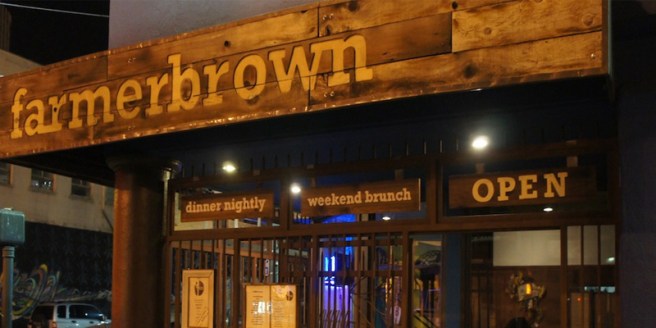
A Letter to Darren Walker, President, Ford Foundation

Dear President Walker:

I’m a fan.  When the Ford Foundation rolled out with its 20% Indirect Cost Proclamation I was like, “Holy shit!  Walker is for real yo!”  (I’m from East New York Brooklyn, so you’ll understand this is my first language.)

That said, I am concerned about your recent short video piece on being a “Disruptor.”  I was with you until you declared that being a disruptor of the status quo is “fun.”  Why the worry?  Suggesting the role of a disruptor is “fun” hints you may be falling victim to the creeping insularity that, sometimes, comes with mega-foundation-directing, flying-at-30,000-feet daily life.

Here’s another take on being a “disruptor” and taking on the status quo: Your job and funding get threatened.  An example: Years ago I signed-on with the current San Francisco mayor and district supervisor to support their campaign to bring tech companies to a long-dilapidated commercial corridor in a poor neighborhood.   Later, when I objected to how the city abdicated on its responsibility to leverage tech’s investment to the betterment of local residents, I was threatened by a city official to get on board or risk losing my job and having my organization’s funding cut.  (At the time I was running a small Tenderloin nonprofit.)

I resigned shortly after to make sure my organization – the Tenderloin Economic Development Project – was not punished for my refusal to play along.  And I was cool with that because I wasn’t going to kiss the city’s ring, but it wasn’t easy or “fun.”

So that’s how it goes President Walker, at least for some of us.  If you have an ironclad source of funding and job security, enjoy it.  Go wreak havoc on the status quo, just please don’t call it “fun.”

Your fan,

elvin
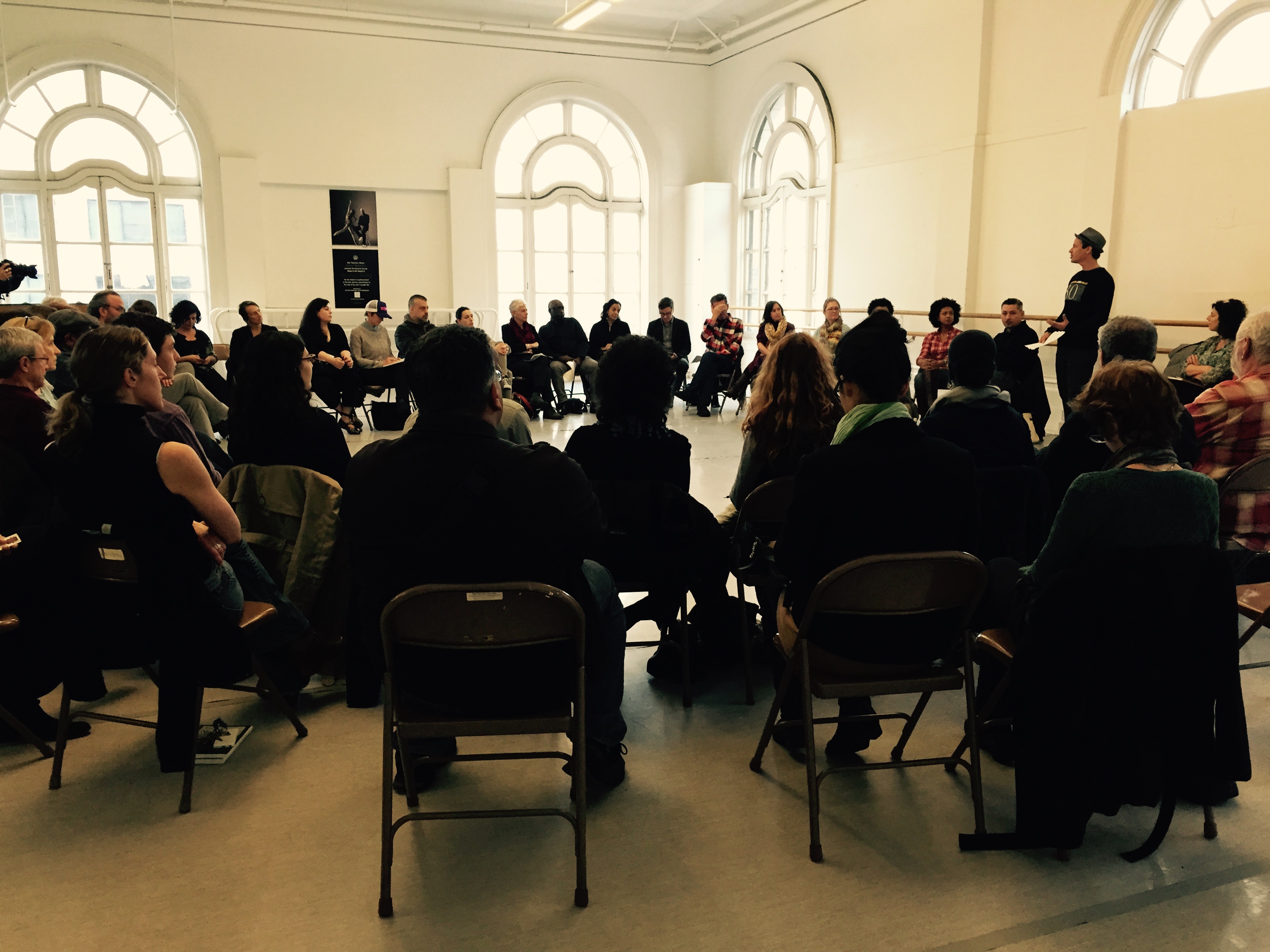
P.S.  To the safe havens and friends out there that always kept their doors open to me (and no doubt to other political dissidents) – Luggage Store Gallery, the Vietnamese Youth Development Center/Judy Young, Warr/Zamora Productions, Marc, Ellen, Keefer, Ebony, Lex, Shelley, Frances, Carmela, Terrance, Deanna, Bita, Indra, Paul – thank you.

Pops and Roberto Clemente

Pops died on the day of my Tenderloin Arts & Education Advisory reunion, July 28th, 2016.    I flew up from Santa Ana the day before to facilitate the meeting at 826 Valencia, which kindly offered to host it at their new Tenderloin space on Golden Gate (thank you Bita).  As I was getting dressed I got the text from my brother: The nurse is there and now says it could be tonight or tomorrow.  A few days earlier the nurse said he had a few weeks left.  Half sobbing, I text Michael Warr, Deputy Director at the Museum of the African Diaspora, and Patricia Zamora, Area Director SF Boys & Girls Club, to ask them to take over the meeting for me.  Michael and Patricia are family; they responded immediately: We got this, sending you prayers and blessings.

I raced back to the airport but didn’t make it back on time.  My brother called while I was waiting at the terminal.  I answered, but there was no voice on the line.  I knew pops had died. Finally, my brother said: Yo man…he’s gone!   Then I heard him wail, a piercing, pained sound like I never heard before.  Thinking of the agony of that sound makes me want to cry.

Okay, okay, not sure what to say to my brother.  I’ll be there in 2 hours.  The nurse says they have to take my dad’s body away now, but my brother tells them I’m coming and they have to wait.

Pops is covered with a light cloth when I walk in.  I pull the cloth off of his face and torso, and see he’s wearing his favorite flannel shirt.  The color has left his skin, and he’s cold to the touch.  Just a few hours before I kissed him on the head and said “See you later pops.  I have to go do a volunteer job.”  His mind was already gone but I wanted him to know why I had to leave for a little while.

I took my bracelet off and put it on his wrist, a bracelet Joy made to protect me during the Year of the Dragon.  I never took it off even after the Dragon year passed.  Joy made me another one which she brought down two days later when she came to visit the family.

FullSizeRender 5

Cremation arrangements are made.  My brother and I chose a local “Cremation Society” that seemed a good fit for pop’s: simple, no frills. The director asked my brother and I if we wanted to be present.  There was a moment of silence: neither one of us anticipated that question.  I eventually said yes, thinking I can’t leave my dad alone during those final moments.  Totally irrational, I told myself, but I can’t.

The cremation facility in Santa Ana is just like the factory in Brooklyn my dad and I used to work in.  Well, that he worked in for most of his adult life – I was only there in the summers after I turned 14.  The director was there to meet us (my brother and mother both joined), described the process for viewing and cremation, then surprised us with another question: Would any of you like to turn on the switch to the cremation chamber?

The cremation chamber, one giant super oven essentially, had a few dials on the front and a digital readout: 1600 degrees.  We visited with pops one last time, now on a factory floor, which somehow seemed appropriate.  I gestured to the director that I wanted to turn on the machine.  Then a young hermano came out – his nametag sewed on his shirt read Oscar – gently offered his condolences, and showed me how to turn on the machine.

Mami went back inside to the waiting room.  Oscar lifted the table to match the height of the chamber door.  A last chance to grab at pops’ flannel shirt and pull him off the table before he went in, but I suppress the surprising and curious urge.  In my father went, and then I turned the knob and started the machine.

I’ve had some thoughts on “I should have been there” when he took his last breath.  I’m glad my brother and mom were there; my brother described how he had his palm on pops’ chest, counting his last breaths until there weren’t any more.  I knew it didn’t really matter as his mind was checked-out days before, but I still wish I had been there.  My brother kindly said the same, perhaps reading my mind.

And then I thought maybe my pops dying while I was away, on a volunteer job of all things, was his last editorial comment on my quixotic life’s work to “Make the world a better place.” El viejo mio was not an idealist.  All he knew, and respected, was whether you were working and providing for your family.  Actually, he also knew a lot about baseball, especially Caribbean baseball players, and most especially Puerto Rican peloteros.

The best of the best, of course, was Roberto Clemente.  Clemente was pops’ hero, as well as the hero to Puerto Ricans everywhere.  Two weeks before pops died I found a great documentary on Clemente’s life on ESPN sports.  I also found a segment on the 1971 World Series between the Pirates and Orioles; Clemente was voted MVP of that series.  I set-up my iPad on the table next to his bed and played both documentaries for him.  Ordinarily pops would only remain awake for a few minutes at a time, but once he saw Clemente on the screen and heard his voice, he was dialed-in and would remain alert for 30 minutes or more.

Clemente died while on a mercy mission bringing supplies to earthquake victims in Nicaragua.  This was typical Clemente; once he became a superstar he spoke up on civil rights and the needs of the less fortunate.  Years ago pops argued that it was Clemente’s fault: had he been home with his wife and kids, on New Year’s Eve of all nights, he would not have perished in the sea with his body never to be found.  Go to work, keep your mouth shut, don’t cause any problems and you might live to see another day.

clemente

I could understand why pops saw the world this way.  He grew up a homeless kid in a small barrio in Puerto Rico.  Food, a pair of shoes, a place to sleep – all of these things many take for granted were privileges he did not know on any given day.  He was not a gifted ballplayer like Clemente, whose beautiful game took him to the highest stage of play and afforded him some comfort. Comfort matters like food and shelter, finding and keeping them, were all pops thought about. That and his boys – and of course mami, he cared about her most of all – and her daughters.  If there was a dinner we asked for more food and there wasn’t any, pops would take the food off his plate and put it on ours.  

Mami was also a throwaway child, but she was the opposite of pops: always rebellious, always pissed off and protesting, always ready to tell everyone all about the injustices in the world.  If pops was pro “Commonwealth,” mami was defiantly independentista. If pops said the island would not survive without the United States, mami would say the island hasn’t survived with it. If pops spoke of the virtues of service in the Army, mami would bring up the US Navy bombing Vieques for target practice.  For a time she was a single mother of three girls in Brooklyn’s barrio, and when applying for an apartment some landlords would look at her mixed facial features (Puerto Ricans come in all forms) and ask: Where are you from?  Mami would reply: “I’m from Planet Earth,” and leave to apply someplace else.  Always with an attitude, Mami has been unfailing in her support of my community development efforts (though she wishes I would also have a family of my own).  

That’s all for now.  Still processing.  Still don’t know which parent is right.  Love you pops. Gracias Michael y Patricia.  Thank you Joy.

pops army

Elvin Padilla Rodriguez, Dear Husband and Father, 1934 – 2016
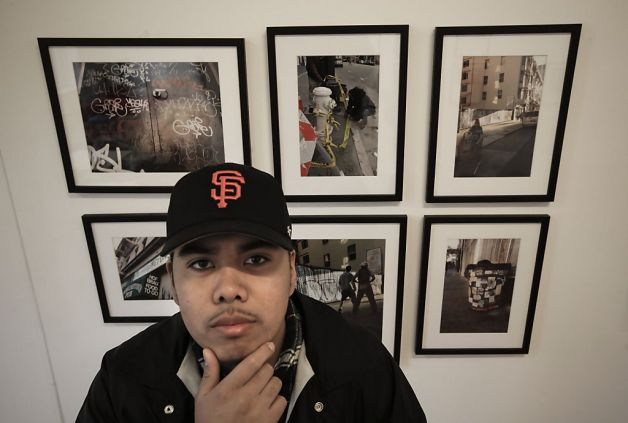
Magic Theater Joins Tenderloin Arts & Education Community

Note to Self: If you can’t get promised arts district legislation passed or implement a local tax-capture finance district, get out of the way and let four brilliant women make magic happen.  In this case, the magic is the Magic Theater, which is coming to Turk Street as part of the 950 Market Street project.

This wonderful new addition to the Tenderloin’s local arts ecosystem was made possible by Loretta Greco, Magic Theater’s Artistic Director; Jaimie Mayer, Magic Theater’s interim Managing Director; Ellen Richard, former executive director at Magic and A.C.T., and Joy Ou, President of Group i and trustee at the venerable San Francisco Arts Institute and Global Heritage Fund.  After several years of a great TL arts and education coalition’s struggle for an arts presence at the site I can’t think of a more fitting name for our new neighbor than Magic. Group i and the Magic worked hard on crafting a community benefits program. The arts & eds groups are reuniting this week to celebrate the good news and welcome their soon-to-be new neighbor. 

The idea of 950 arts on the south side and a renovated 80 Turk Street – the new home of CounterPulse – directly across on the north side, was always thought of as a powerful way to draw lots of diverse people traffic to a long-devastated and particularly problematic block in the Tenderloin.  I’ve spent a lot of time on Turk Street over the past 7 years, have seen a lot of human misery and have listened to many stories.  Perhaps most memorable were tearful testimonies from Dalt Hotel residents about how difficult life on the block has been.  The people traffic 950 will bring, especially now with the addition of the Magic, will help the many who for years have felt trapped by fear and dread of walking out their front door.

Equally important, in my admittedly biased opinion, will be the powerful new addition to the built arts and education environment that our youth will know, feel at home in, be a part of, in their neighborhood.  Some day-trippers with a M – F, 9 – 5 understanding of the TL have difficulty appreciating what this means, but our youth and families who spend 24/7 in the ‘hood understand.

By the way, congratulations to all those who worked to make the Bayview Opera House possible. Fantastic.  It bears repeating: Developing bridge-building cultural resources in our neighborhoods is the ultimate creative placemaking.

But let’s not celebrate just yet. If you value the arts, and think the arts merit equal consideration as a valuable community benefit – a position that still comes under attack by those who see the arts as superfluous to the needs of poor people – then you should strongly consider signing-on as a supporter of the 950 project.

Please contact the Magic and Group i to support this important project.  For more information please contact Jessica Berg: jberg@bergdavis.com.

Keyser Marston arts space economics report

This is a technical report assessing the economics of the 950 Project as a real estate development. It outlines the public subsidies necessary and various strategies to achieve them.  The analysis and conclusions are based on industry standard affordable space economics, something the city of San Francisco chooses to ignore.  The choice to ignore this report’s recommendations, specifically and generally, resulted in 950’s demise and the city’s now famous scarcity of protected, affordable space.

This report on the economics of providing affordable arts space was also withheld – by the mayor’s office – from the city’s two arts departments: Grants for the Arts and the SF Arts Commission.

Keyser Marston arts space economics report

Tenderloin Arts Advisory & Friends, January 2015. Illegal arts funding in San Jose. Pumping up the Advocacy Volume with ABBA.

FullSizeRender (3)

The wonderful ensemble of the Tenderloin Arts Advisory & Friends, hosted by our friends at LINES Ballet.  January, 2015.

I hosted my last TL Arts Advisory & Friends on January 16th.  Whether the advisory continues or folds into Arts for a Better Bay Area (ABBA, see below!),  it’s time the arts advisory and advocacy builds an organizational infrastructure.   We heard from several dynamic speakers including Steven Anthony Jones of Lorraine Hansberry Theater, Terrance Alan of the California Music and Culture Association and Richard Livingston of the EXIT Theatre.  From Steven Anthony Jones we heard a charismatic call to organize, arguing that “the time is now.”  From Terrance Alan we heard an impassioned plea for San Francisco not to become one mega museum – an amusement park of charming cultural relics of yesteryear.  From Richard Livingston we heard a blunt testimony about the arts community being “ill prepared” to respond to the upcoming city budget negotiations.  Livingston went so far as to say the arts will never achieve an equitable outcome should they have to annually jostle for a place in the city’s general fund budget.  On this very important topic we discussed the decoupling of hotel tax revenues and Grants for the Arts, historically the city’s main source of operating funding for arts organizations.  We were advised by Tom DeCaigny, Director of Cultural Affairs, that the city’s attorney moved to decouple the hotel tax revenue from arts funding out of concern of potential legal exposure.

A lawsuit to challenge a percentage of hotel tax revenue going to the arts?  Really?  I suppose it’s possible – anyone can sue for anything in our system.  Years ago I worked with the Los Angeles Redevelopment Agency.  I tried to get more of the agency’s massive resources into the hands of small arts organizations, like the wonderful Tia Chucha’s Centro Cultural in the San Fernando Valley.  The pushback came quickly: I was told that funding arts groups directly was illegal under redevelopment law.

But hold on!  Not too long after, the Ford Foundation asked me to do a site visit to the fantastic MACLA – Movimento de Arte y Cultura Latino Americana.  MACLA received Ford Foundation funding for its outstanding work in bridging different groups and cultures in their neighborhood in San Jose, i.e. community building through the arts.  At the time MACLA was working closely with the San Jose Redevelopment Agency on a new facilities project.  I spent some time with SJRA officials to learn of their plans, and was very surprised that they involved significant operational support, the very kind the LA agency told me was “illegal.”

I asked the San Jose officials about this.  They responded “there’s always a chance we’ll get sued for any of our work by some tax-payer association of some sort.  That’s what we have lawyers for. We think the arts are important to invest in.”  Wow.  So the takeaway here, for me at least, is to keep a healthy skepticism when government officials offer quick dismals of proposals and programs being “illegal.”  There is often room for interpretation in the “law,” and what is truly the decisive factor is our leadership’s willingness, or lack thereof, to push the envelope.

In retrospect, it’s too bad there indeed wasn’t a lawsuit, one that came from the arts community when the link between the hotel tax fund and arts funding in San Francisco was severed.  The arts community was probably, as Richard Livingston said, ill-prepared to respond.   Note to ABBA: don’t readily accept “we can’t do that,” or “that’s illegal,” or, especially, “we’ve always done it this way” as answers.  Push our leadership to push the envelope.

Jammin’ with ABBA

On to good news! Arts for a Better Bay Area is here! Under the very capable leadership of Ebony McKinney and Lex Leifheit, organizing meetings are off to a great start.   To the extent my work has garnered support from many wonderful people in the arts and arts education community I ask that we all get behind ABBA’s efforts and give them a chance.  It will be a difficult, messy, confusing, imperfect process, but that’s the price we have to pay so we can’t be so easily dismissed by mayors and supervisors.  With perseverance we will get to a much better place as a community.

Judging from the diverse representation of people and groups I have seen in the organizing meetings held to-date, I see a great deal of promise in ABBA, and if they win, so will the arts community.

Want to learn more?  ABBA’s hosting its next meeting on Tuesday, March 24th.

CBOs Letters to Supervisor Kim and Mayor Ed Lee

Many of us in the community saw the tech-fueled tsunami coming.   While many individuals and organizations sought to stop and protest against tech companies settling in San Francisco, a collaborative of over 20 community based organizations chose to support Mayor Ed Lee and Supervisor Jane Kim in their actions to attract investment to mid-Market.  That said, we also were very clear in communicating our hope that this investment would be leveraged to the benefit of the community at large.  These letters describe this hope.  They were summarily ignored by Supervisor Kim and the mayor, both of whom have completely failed to capitalize on the city’s historic boom to the benefit of its marginalized citizens living in intensely concentrated poverty in the Tenderloin.   We were instead told: “Talk to Twitter.”

CBOs Mayor & Supervisor letter re facilities financing.

St. Anthony public finance support letter

NCCLFlettertoEdwinLee

Mercy Housing letter of support

Intersection for Arts support letter Lee

Intersection for Arts support letter Jane

Hastings public finance support letter

Dinafinancesupportletter

Arts vs. Social Services Displacement

Mami always railed about the neighborhood doctors wanting to prescribe her anti-anxiety medication.  In bombed-out, famously violent East New York Brooklyn it seemed like everyone was on meds of some sort, prescribed and otherwise.

Whenever the doctors wanted to write her a prescription for some chill pills she would, talking to no one in particular in the kitchen, say “Quieren darme pastillas , pero no voy a tomarlos!”   Maybe she should have – she certainly had a lot on her mind. Raising her kids in a very dangerous neighborhood that was burning down all around us, living in a substandard apartment that eventually got condemned by the city as “unfit for human habitation” (that’s what the big orange poster outside read in big block letters when I came home from school one day).  And even that nice lady who came with the clipboard from time to time, which always curiously caused us to hide the mini toaster oven – and pop’s shoes – in the closet; something about that lady made mami nervous. As kids we all took it in and still went out in the street to play, but for her life must have been very stressful.

But no to those damn pills! mami would say.   Instead she would put on her music from the island, and sing, every day, every night, for as long as I can remember.  Music was her therapy.  Music was her social service.

I’ve been thinking about the arts and social services ever since last fall’s supervisorial candidates forum on the arts, which was a bummer.  With the exception of one, there were uninspiring presentations all around, and candidates arriving late and leaving early – clearly arts organizations are not a constituency to contend with.

I heard two points from District 6 Supervisor Kim.  First, city hall doesn’t know what the arts community wants as there is no advocacy voice presenting a coherent message.  In regard to the annual city budget process this is indeed true, and an exciting new movement – Arts for a Better Bay Area – is in the works to address that.

The second point Supervisor Kim made was that displacement of arts groups is a cyclical phenomenon, and that most groups eventually land somewhere.  This is arguably also true, though of course it begs several questions: What about the groups that don’t land on their feet? Are we okay with cyclical displacement of arts organizations?  What if they’re displaced out of our neighborhood?  Should supervisors do everything they can to work against losing neighborhood arts organizations, capacity and resources to other districts?

Here’s another question: Would we casually accept this dynamic of cyclical displacement if we were talking about social service organizations?  That seems highly unlikely.  Maybe the arts advocacy community should think of embracing a new tagline: Arts, the original social service.   I bet that would score the arts more respect.   (I know mami would dig that!)

Candidate Tony Kelly offered what, to me, was the only inspiring comment of the evening when he said “yes the arts are notoriously difficult to organize, but that doesn’t mean we, as city leaders, should not look after their interests.”

The 950 Journey – Part 2

It is my hope the 950 Journey will be instructive to all current and future arts and arts eduction advocacy efforts.  It is a remarkable story that has involved many twists and turns.  Undoubtedly the media will only touch the surface, as in the recent JK Dineen article in the Chronicle.   The summary that follows is to help clarify what happened, with some commentary on my part.  After all, I was invited by this city to do community development through the arts.  Six years later I do have a few things to say.

The arts organization’s (950 Center) development team, the SF Foundation (previous top leadership, not the program officer) and Group i had several project development meetings in 2013 that led to a simple agreement: the SF Foundation would 1) keep up with quarterly development expenses related to the arts space, and 2) take point on raising the funds to build the building/get the campaign going. Group I would take point on project management and endowing an operating fund that would subsidize small-budget groups to ensure access to the Center. Group i would create this endowment based on the incentives the mayor’s office promised, i.e. additional value from additional height. We all knew that a debt free space wasn’t good enough – we would also need an operating subsidy. Group i retained a highly respected local philanthropy advisory firm to begin the process of structuring this endowment.

At the conclusion of these meetings, contrary to JK’s reporting, there was total clarity and agreement between the arts organization and Group i.   Group i never “insisted that the arts nonprofits pay 50 percent of construction costs.” It didn’t have to – the SF Foundation pledged to take leadership on this since the project – in addition to landing ACT’s great drama school for the Tenderloin – was conceived to serve groups that did not have that capacity.   For this same reason, i.e. the SF Foundation’s commitments, the arts groups never were “pushing for the developer to bankroll construction.” In fact there was just one “art group” – the 950 Center group – not “arts groups” at all.

I can’t explain why the promised support did not materialize. Not one agreed-to quarterly funding milestone for the arts program was met. I can report, however, that the arts group learned much later that the SF Foundation (previous senior brass, not the program officer) and the mayor’s office were engaged in talks that the arts group was not aware of. I was stunned (20 years of working with foundations, big and small, local and national, I’ve never experienced anything like this) and should have jammed on the brakes right then, one of the many times I should have. The deal we had with the SF Foundation slowly and mysteriously vanished, though the arts group team didn’t realize it at the time. Or perhaps refused to believe it. It seemed impossible this would happen. Years after the foundation said it was going to buy the properties, but then didn’t, while subsequently not returning emails or phone calls, I refused to believe there could be a second astonishing disappointment.  Not twice.

In the absence of special use legislation for the arts being introduced and passed, JK is inaccurate in his reporting that the city was willing to rezone the property. In fact, in June, 2014, Tom DeCaigny, Director of Cultural Affairs, reported to over 40 arts organizations that the mayor and Supervisor Kim were going to co-introduce the legislation last fall. This did not happen.

Perhaps rather than going by what city officials “felt,” (JK’s term) we all should have gone by what Keyser Marston, an objective third party economics/feasibility analysis firm highly experienced in real estate development, proposed in their September 13, 2013 report to the mayor’s office.   Their “Preliminary Draft Assessment of Arts Incentives Options,” provides a detailed, well, assessment of options to the city.

As it turns out Keyser Marston’s analysis of the economics validated Group i’s analysis. In fact, it calls for options that went far beyond what Group i proposed the city could do to help build the project. Unfortunately neither the arts group nor Group i knew that since the report was not made available until more than a year later.   It was lost, misplaced, forgotten, who knows.

It is also notable that Tom DeCaigny, one of the city’s two highest level arts leaders who had been participating in the city’s project meetings, was also unaware of the existence of this report. (I’m certain Kary Schulman, Director of Grants for the Arts, was also kept in the dark, though I was told she, along with DeCaigny, were closely involved in discussions.) This report could have been the ultimate blueprint for how to make projects like 950 possible.   The catch? The missing report called on the city to do much, much more than what it has done historically to support the development of affordable space.

The report also validates the advocacy letter from over twenty community based organizations that called, nearly three years ago, for Mayor Ed Lee and Supervisor Kim to utilize a tax increment strategy to help make projects like 950, CounterPulse and Luggage Store pencil.   The letter was ignored.

The mayor’s development director claims the project died “despite their best efforts.”  It is very troubling to think that misplacing or losing or ignoring the one third-party objective analysis that could have fixed everything constitutes the city’s “best effort.”   You best check on that best effort Mayor Ed Lee.

I can’t say if Keyser Martson’s analysis validated the city’s analysis because, it appears, the city goes by what it “feels.”   That famous breakfast meeting the mayor hosted, over two years ago, to tell the development community his shop was going to develop incentives for arts space development seems to have translated into “feelings.”

I collaborated a while back with a city hall veteran who shed some light on these municipal moods.  He told me the city looks at the St. Regis super luxury hotel and MoAD as its reference model, i.e. find a high-end/luxury project and tack on a cultural facility (whether the location makes sense for the cultural facility or not, and is a complete afterthought, or even sucks, design-wise). That is not “creative placemaking” Mayor Ed Lee, that is expedient mall making. In contrast, Group i positioned the 950 Center in a highly integral and prominent way. And it was going to go up in the ‘hood, not in a super high-end/luxury residential and commercial district.  In fact, Group i was pressured by city hall spokespersons to go super uber-luxury on both the 950 residential and hotel components to follow the St. Regis and Millenium Partners models. This, while Group i has been struggling at each step of the design and cost engineering process to keep residential price points well below the median home price and introduce a moderate price point hotel that would match well with the local fringe oriented arts scene.

Some outsiders (none in the Tenderloin) have questioned my allegiance since I’m close to Group i and its president.   To them I say my allegiance lies with Keyser Marston’s report.   (To my knowledge I don’t know anyone at Keyser Marston.)   If the city had adopted its recommendations 950 would have been well on its way and a new, fantastic and successful model would have been established to build additional cultural facilities, or affordable housing, or community facilities assets period, arts or otherwise.

A word from Banksy: “The most dangerous phrase in language is “we’ve always done it this way.” (Don’t know if Banksy really said that. No matter, it applies here big time.)

Speaking of a new successful model, there’s another developer with a prominent site along mid-Market (he asked not to be identified) that took keen interest in doing an arts facilities or artist housing project after learning about 950.  They approached Group i over a year ago.  Group i brought this developer to the city in the interest of working together to truly build a mid-Market arts district (remember those days?).  The mayor’s people wouldn’t agree to meet with them together (We all wondered, huh? But now I understand why). This other developer concluded that there wasn’t any proof – or even signs of proof – of legitimate incentives from city hall that would justify taking on the huge additional risk inherent in incorporating an arts project, so he’s going forward with an as-of-right project sans the arts.  Bummer…we could have been a contender.

As for Supervisor Kim, if she’s “disappointed” as she claims to be she should have showed up with legislation to help make it happen. The Tenderloin just lost $24 million (and this is the figure that was already committed before the capital campaign started) for thousands of feet of permanently protected arts space and a landmark arts education school that would have been at our kids’ front door. This happened under her and Mayor Ed Lee’s watch. And for that matter Grants for the Arts and the SF Arts Commission, though they, as has been explained, were effectively lost.

Another JK error, the SF Foundation did not file the paperwork necessary to establish a nonprofit to oversee the project.   This was done on the recommendation of a consultant who concluded the project was going nowhere until it had autonomy from the foundation. Group i, as did I, parted ways from this group once it became clear it was taken over by de facto city hall spokespersons and legacy ambassadors of “but we’ve always done it this way.” These spokespersons failed to name a successful case study when asked.  Despite this fact, the mayor’s office mandated Group i work with Team Status Quo, who were, in addition to their devotion to said status quo, too calcified to realize they were in fact arguing against years of arts/cultural equity advocacy and the most important how-to-build affordable arts facilities policy paper in the city’s history, or at least mid-Market’s history.  The city hall appointed spokespersons began to advocate that Group i go high-end luxury (like the aforementioned St. Regis/MoAD and Millennium Partners/Mexican Museum.) Group i, again, committed to make the project as affordable as possible with zero subsidy to work with, refused.

Team Status Quo clearly felt Turk & Taylor is comparable to the site for the future super-luxury Millennium Partners Tower/Mexican Museum, which will be surrounded by the Four Seasons Hotel, the St. Regis Hotel, the Paramount, the new $800 million (give or take) SFMOMA and Yerba Buena Center for the Arts.  (All that luxury surrounding the new museum – my fellow Latinos, we have arrived!)

On height. Everyone should understand 950 could only pencil if the project went over the existing decades-old height limit. The local TL arts groups knew that. That was always the case, barring significant public subsidy which we all know is not a possibility in this town. It’s nice to read my old crew at TEDP chiming in as arts promoters. Now, are they willing to back a project when it gets challenged for going above the zoning limit? If not it’s a meaningless, rhetorical promotion. There were already threats being made against the project going above 120 feet, regardless if the additional height bought affordable arts space or affordable housing.  Are we as a city willing to go taller to get affordable arts space or affordable housing?   Signs are mixed at best.  In the Tenderloin, signs are unequivocally bad.

This is one of the great errors I’m personally guilty of. When I began work on 950 back in 2010 I just did not know this town is aggressively anti-height, anti-density, regardless if that buys affordability. After hearing some of the static – and realizing the promised help with the campaign would not come – I thought perhaps we should proceed with a shorter project: a) A.C.T.’s landmark drama school, b) a black box – primarily for Lorraine Hansberry Theater, which I had been trying to land in the neighborhood for years – and c) some rehearsal and classroom space. But then I heard talk from a senior city hall official that the “temperature” wasn’t right for passing legislation that would help a “wealthy and white” institution, regardless of its plans to build an amazing school that would benefit thousands of underprivileged kids and adults.   Okay, how about small people of color organizations?  Not so fast, the little guys don’t have the requisite operating reserves and make funders nervous.

So, no to height, no to density, definitely no to poor people of color, and no to wealthy white people willing to invest millions in building an arts school our residents can go to in their neighborhood (there is no higher “creative placemaking” than putting it in our neighborhoods). I mean, I confess, I didn’t know all this back when we started.  For real.

Something about this whole episode reminds me of the way city hall dealt with the payroll tax break. The community got duped into going after Twitter and their brethren for Community Benefit Agreements to fix terrible conditions resultant from decades of neglect – or systems intentionally designed and maintained – when the real focus should have been placed squarely on the city.   But corporations – good ones, slacker ones, it doesn’t matter – are easy targets for supervisors and city hall to hide behind with easily digestible rhetoric offered to the masses.

Back in 2013, when the 950 properties were up for sale, the mayor’s director of development told a 950 arts consultant “the winning bid had better not include an arts component.”   How odd, given that the mayor had just broadly announced to the development community his office would incentivize a major arts program at the site.  Now, with the media inquiring, he’s heralding the success of the “arts district” by pointing out a few groups, though failing to mention all but one he lists have a lease time-bomb ticking.   Just a few meetings ago – with a major arts organization sitting across from him bringing millions of dollars to the table – he inexplicably and unilaterally announced he’s stopping the 950 project and that the arts group is forbidden to raise funds.  I mean, what is this?

Well I guess we should have listened, city of San Francisco.  At its core 950 was about disrupting the intense concentration of extreme poverty in the Tenderloin.  As it turns out there is no interest – on the part of the city and the major nonprofits that systematically maintain it – in disrupting the intense concentration of extreme poverty in the Tenderloin.  The mayor is satisfied with it. Supervisor Kim celebrates it.  Changing this status quo is, clearly, the kind of non-algorithmic, disruptive innovation San Francisco is profoundly uncomfortable with.

Cultural equity discussions: Summer 2014, San Francisco, California; Summer 2006, Houston, Texas.

This summer I got looped in the fighting over cultural equity funding for the arts – or the lack of it from the perspective of some – in San Francisco. Angry testimonies swirled on the ethersphere, arising out of a perfect storm of a very rough summer of arts groups’ displacement, shocking collapse, confusion, fear and anxiety. I also listened to angry testimonies at an emergency focus group meeting called after the dire announcement from Intersection for the Arts’ board of directors.  Shortly into the focus group I had the thought that I had attended this same meeting before.  That in fact I’ve been attending variations of these meetings for nearly thirty years now and that the testimonies of injustice, sadly, were somehow the same.

My first introduction to arts politics took place in Houston in spring, 2006. The wonderful Project Row Houses hosted a national conference on arts and community development. The Ford Foundation’s community development program director sponsored and asked me to address the assembly of mostly arts professionals on the basics of real estate development. Ford’s program director was trying to get the groups to understand basic real estate development principles so they weren’t constantly at the mercy of ever-changing market forces.

But a fight broke out almost immediately during the opening plenary session.  Several attendees stood up and spoke angrily about the inequity of funding in the arts community.  “The issue is not real estate related,” one participant declared, “the issue is the big houses (symphony, opera, ballet, big museums) always being entitled to the lion’s share of the money while the rest of us have to constantly justify and fight for our existence.”

What a welcome!  My initiation to the politics of arts funding had begun.  Her statement triggered other declarations of injustice that spread like wildfire throughout the room.   There was barely time left to get in a word about arts and real estate development.

I can understand the frustration. Did anyone see the recent 60 Minutes segment on the Metropolitan Opera in NYC?   General Manager Peter Gelb has embraced new entrepreneurial approaches to generating revenue, like broadcasting in HD in cinemas throughout the world.  These broadcasts have grossed nearly $60 million for the Met.

Still, the Met is one hundred million dollars in debt!  I can imagine the calamity if I tried to set up the chronically in debt Metropolitan Opera at the 950 Center for Arts & Education (soon to be reprogrammed and renamed – stay tuned!).   Perhaps we should send them to the Northern California Community Loan Fund for a financial work-up. On the opera’s shocking debt, Gelb offers:

Opera’s always in debt. From a business point of view, opera shouldn’t exist. I mean, it only exists because there are enough people who love opera and my job is to try to persuade them that it is necessary to change in order to keep the art form alive. Otherwise it will die with them.

A pretty sober and refreshingly candid response. Cultural equity follows cultural values, i.e. society digs opera and still finds it worthwhile to keep it afloat even though it is deep in an ocean of red ink and altogether not a sustainable business.

This is, of course, a bit simplistic.  And to be fair, the Met employs 3000 people while generating big tax bucks as an important part of NYC’s vital arts-based hospitality economy.  And maybe they’re providing great educational programs to thousands of youth like the SF Symphony does.  (Also, on a personal note, while I’m not an opera person I don’t mind some of my tax dollars going to support it if I know that a portion of that money is going to benefit company carpenters, set designers, writers and the line cooks and dishwashers at the restaurants across the street, i.e. my peeps.)

That said, it would be nice if we stop stomping on the little guys and asking them to hold to standards a major institution like the Met itself can’t meet. The 950 Center, as one example among many, has been subjected to many lectures about the necessity of being in the black and not requiring subsidy. (Nip and tuck here and there and we’re now doing better than the Met!)  The Tenderloin’s rich arts ecosystem of Luggage Store Gallery, EXIT Theatre, LINES Ballet, Cutting Ball Theater, Center for New Music, CounterPulse, and others are also critically important to the city’s arts-based hospitality economy and should be treated as such on equitable terms.

Yet here we are again. (And again.  And again.)  As usual there is no shortage of bomb throwers while rational conversation remains elusive.  I do know there are several smart and thoughtful individuals in the Bay Area arts community who are saying something structural is broken.  The arts community must take this up.  Maybe we should start with what Tom DeCaigny, Director of Cultural Affairs, SF Arts Commission, suggested – a data driven approach.  Whatever we do our goal should be to stop sniping at each other and start generating new dollars for the arts.

Generating New Dollars for the Arts

City tosses beleaguered nonprofits $4.5 million. That was the headline on the front page of June’s edition of Central City Extra, our community newspaper. In response to this temporary-fix measure, Brien Cheu, director of community development at the Mayor’s Office of Community and Housing Development, was quoted as saying:

Is it possible, if we came up with some creative financing, to create a substantial, multitenant space, along commercial corridors where transportation is easy, especially by low-income individuals? Rather than focus on rent subsidies we want to create as many structural fixes as we can, so we’re not back here in another five years.

Well, Mr. Cheu, many of us in the Tenderloin and arts community have been wondering the same for years now. In fact, if we approached you with an opportunity to help us build exactly such a multitenant space for several cherished arts and education groups along a very prominent commercial corridor with very easy public transit access, what kinds of creative financing might you have in mind?

950

In the article Supervisor London Breed noted that the ADA-compliance work needed at the African American Cultural Center on Fulton could alone absorb nearly the entire $2 million (thank you Supervisor Avalos!) of the allocation earmarked for the arts. The same could be said for work needed to get CounterPulse up and running at 80 Turk, or the Luggage Store Gallery on Market.  I know LINES Ballet was absolutely thrilled just to get hot water heaters installed; my goodness maybe we can do better by one of the world’s most renowned dance companies in our own hometown.  There are many examples.

Still, the appropriation is a start. Two years ago, over twenty community-based arts, education, service organizations (and one affordable housing developer!) signed a letter requesting that the city capitalize on the boom in property taxes and create a fund to reinvest in the neighborhood for long-term structural stabilization solutions.  We got a “no,” with the rationale being improving the neighborhood would gentrify it. (We should all take pause and think hard about what we’re saying here.  Think about what we’re saying to poor people.)  Ironically, our failure to be creative, as Mr. Cheu is now calling for, left us in a weakened position to respond to the displacement of nonprofits resulting in the very gentrification those advocates who opposed creative public measures claimed they were concerned about. A self-defeating, self-fulfilling prophecy.

City Hall was for a local “capture and reinvest the property tax boom” mechanism before it was against it.  In spring, 2012, at a breakfast hosted by farmerbrown, Mayor Ed Lee addressed a prominent group of Tenderloin/mid-Market arts & education stakeholders and local foundations and announced he would get behind the formation of a local property tax capture district to invest in neighborhood projects.

From the March 27th, 2012 memo the Office of Economic and Workforce Development staff prepared for the Mayor to prep him for the breakfast:

NOMNIC’s Board feels very strongly that for complicated, ambitious projects like 950 Market and others to come to fruition, the City needs to find a financing source.  Your Central Market Economic Strategy agrees and calls for the pursuit of an Infrastructure Finance District (IFD).  IFDs would arguably be an achievable city funding strategy given its utilization would help underwrite the development of cultural/educational facilities at 950 Market, the Strand and Market Street Cinema.  NOMNIC is also looking into other finance mechanisms such as a cultural/educational facilities bond to take on mid-Markets derelict properties.

A blast from the not-too-distant past!  At that time my old crew NOMNIC (better known as the Tenderloin Economic Development Project) and I were fighting to make 950 Center for the Arts happen and were also advocating for repurposing other major derelict assets like the Market Street Cinema, Crazy Horse and the Strand.   We envisioned a multi-tenant 950 Center for Arts & Education, a new landmark home for the beloved Alonzo King LINES Ballet Dance Center up the block, and a mid-Market destination for the annual SF International Film Festival at the new home of the San Francisco Film Society. (Initially very skeptical, SFFS’s visionary Graham Leggat was warming up to mid-Market before he tragically passed.)

Going back earlier, to summer 2011, I collaborated with the mayor’s staff on my article for SPUR: Four Ways to Transform Mid-Market.   

The mayor hasn’t acted on the finance district yet.  Word is some in city hall got concerned about communities all through the city wanting their own tax capture districts, creating a chaotic situation for the city.  Also, some key local affordable housing developers declined to support it because there wasn’t money for new construction affordable housing through the readily available post-redevelopment tax capture mechanism (IFD).

While we haven’t heard back from the mayor and some on his staff is now reportedly hostile to reinvesting local tax dollars in the Tenderloin, Supervisor Kim took a very modest initiative to create a fund based on property tax revenues so the precedent has been set.  Maybe we don’t need to form a district after all and can just add more to Supervisor Kim’s recently created fund.  We can call it the “After Decades of Neglect, Exploitation, and Extreme Socio-Economic Segregation We’re Going to Reinvest the Gains from the Tech-Fueled Real Estate Boom for the Benefit of Equitable Development for Tenderloin Residents Fund.  (We’ll worry about the acronym later.)

And, also very encouraging, director Brian Cheu is calling on city hall to get creative.  So maybe the door is still open.  Maybe there’s still time.  I of course have to think so with so much at stake.  If not, let’s at least have the integrity to be straight-up with our arts community and tell them we’re cool with their moving elsewhere if they can’t make it in San Francisco.  Unless, of course, that would result in big empty dark spaces on Van Ness, in which case we might finally get inspired and float a bond measure for the arts.

Forming an alliance with the A(ffordable housing) Team

The arts community, once it gets itself organized, should do what Rocco Landesman did and buddy up with the team that always gets the big bucks: affordable housing.  In 2012 we voted for Proposition C to create a $1.5 billion dollar trust fund for affordable housing.  There will very likely be another bond measure in 2015 for another half billion dollars.   That’s $2 billion approved for affordable housing in a span of three years, and the given the desperate need for affordable housing the number should go higher. I know I’ll vote for it. The arts community should advocate for it.

I would argue that bond money for inclusionary affordable housing should also include money for inclusionary arts, inclusionary education, inclusionary recreation. We can’t live by rooms and sandwiches and meds alone.

Isn’t this the driving principal behind HOPE SF?  Healthy, balanced communities?  Five percent of $2 billion would provide $100 million for a real war chest that Brian Cheu and Tom DeCaigny can use to get past endless triage-oriented approaches and invest in truly long-term solutions toward healthy, balanced communities.

And wouldn’t affordable housing developers who speak all the time about neighborhood development (even use the term in their organization’s name) support this?

I recently had lunch with a big name public finance guy to ask for his help with 950.  He scoffed and said the city shouldn’t be investing in the arts for the Tenderloin/mid-Market. “What the neighborhood needs is more cops and fire stations.”  Yeah, okay.  I’ve also advocated for more cops for public safety, so no argument there.  But why does it have to be at the expense of the arts? (In fact, in light of recent events, if any group could use a heavy dose of human development through the arts, it’s cops.)

I get this view a lot from folks who didn’t grow up in the neighborhood.  Don’t live in it now and never will.  They’ve never waited in line for the giant tin cans of peanut butter and blocks of cheese to take home, find a safe place to keep it from the always-waiting rats and wonder what more there is to life. (Good thing I wasn’t lactose intolerant back then!) Give them poor folks their rooms, their meals, their meds and throw in a bunch of cops.  Mission accomplished.

I’ve grown tired of explaining to privileged progressives why the arts matter to poor folks.  But the message is too important to stop.  Endless cycles of dropping out and incarcerations for most young people who share my background.  We don’t offer them nearly enough ways out and the arts are a most powerful way.  I take consolation that someone with the lofty credentials of Maria Rosario Jackson recently shared she struggles with the same constant challenge. To date my favorite testimony on the topic still belongs to the late Quentin Easter of Lorraine Hansberry Theater:

The TL Arts Advisory & Friends meeting, June 2014.

We had an especially well-attended Tenderloin Arts Advisory & Friends meeting this summer. Our friends at CounterPulse kindly hosted at their new home at 80 Turk. Representatives from 35 organizations attended, including major arts funders as special guests. As usual for the TL Arts Advisory it was a very diverse crowd.

I reported to the group that we needed a new format and organizational structure. Our great, collegial and informal gatherings have worked very well these past 5 years, but the issues are now too big and too complicated – special use district for arts legislation; cultural equity funding; divisions between disciplines and neighborhoods, new facilities development – for a one-person volunteer facilitating 90 minute meetings a few times a year.  We need systematic organizing and advocacy.

Over the years I’ve heard calls to expand the TL Arts Advisory to include friends and colleagues working in other neighborhoods.  My reaction was always concern that the needs of Tenderloin groups like the Vietnamese Youth Development Center, the Shih Yu-Lang Central YMCA, TL Boys & Girls Club, i.e. the small guys (my peeps), would quickly be lost in a larger circle.  One of the wonderful aspects of our advisory is to see these groups sit alongside larger organizations like American Conservatory Theater, LINES Ballet, and form collaborative projects for the benefit of the neighborhood residents.  Community development through the arts; it’s been a wonderful development to watch unfold.

But we’ve now arrived at a place where the Tenderloin groups would be best served by being part of a larger, more powerful whole.  Perhaps, like Arts for LA, we can keep our neighborhood collaborative going while engaging with our colleagues from the rest of the city who would form neighborhood groups that would be part of the larger whole.

The TL Arts Advisory has a lot to be proud of. It was the well from which inspiration was drawn that gave rise to the campaign to build 950, the creation of CAST, the impetus behind special use district legislation for the arts.

After June’s meeting I was approached by a brilliant friend who leads a wonderful arts organization in the Mission.  She asked me “Why the Tenderloin and mid-Market?”   A neighborhood arts center. Special use district legislation for the arts.  Why us?

The answer: years of dogged, extremely difficult, extremely frustrating, at times militant, at times diplomatic, in-the-trenches advocacy by the TL Arts Advisory and the Tenderloin Economic Development Project.  I’ve been picked up and dusted off more times than I can remember by the Arts Advisory and my old board of directors at TEDP.  Nobody gave us anything for free, and the fight is not over.  (Really, with mid-Market business booming, why bother with the arts?)

Any neighborhood can do it.  All should.  I’ve heard arguments that the Mission has been more heavily impacted by the tech-fueled real estate boom than the Tenderloin/mid-Market has.  I don’t know the Mission community well at all but we are happy to break bread with our peers and see what we can build together.  And with the next community.  And the next.

Let’s see where we can all take this.

Community In-Reach at Spotify

On February 21st, youth and staff from the Tenderloin Boys & Girls Club, the Vietnamese Youth Development Center, the Shih Yu-Lang Central YMCA, De Marillac Academy all converged and mixed it up with staff at Spotify, one of our new tech company neighbors at the landmark Warfield Building.   Spotify – thank you Mo – kindly invited the youth groups to showcase their work from their PhotoVoices Project exhibit Ain’t Nothin’ Tender.

There we’re many wonderful aspects to the evening.  I especially enjoyed seeing the youth excited about their photography exhibited at one of the much-fabled tech companies just blocks from where they all live.  Through the event Spotify helped demystify what a tech company was for the kids.  The event showed them how they belonged there just like everyone else.  (There were also many discoveries of shared interests in music, naturally, the event being at Spotify.)

I saw a glimpse of the future of the 950 Center for Arts & Education that night at Spotify.  Our kids, tech workers, parents, youth groups staff, local artists, all under the same roof and, to use a technical term, just chillin’.   The arts giving us a platform to share perspectives, interests, and the walls that separate us coming down, without us even realizing it.

I sometimes get asked by funders: “What’s your outreach plan?”   Or “What are your ‘social justice’ or ‘community engagement’ plans?   I’m always a little puzzled by these questions.  We all move forward together or not at all. Community outreach?  That question assumes a separation where none exists.  Maybe we should coin a new term: Community In-Reach.

The Spotify event started with the hard work of and collaboration between Judy Young at the Vietnamese Youth Development Center, Patricia Zamora of the Tenderloin Boys & Girls Club, James Alderson and our old friend J.D. of the Shih-Yu Lang Central YMCA.  De Marillac Academy’s Paul Avvento joined and brought copies of De Marillac kids’ first volume of poetry: Rise Above. That’s as good as it gets community in-reach, and we’re going to do a lot more of it and continue to bring the walls down.

DSCN5519.JPG

The TL crew at the original Ain’t Nothin’ Tender PhotoVoice opening exhibit at SF Camerawork, a world-class gallery on Mid-Market where they now also feel at home.  More walls came down as their art and prose went up.  Their powerful experience was covered in the SF Chronicle.

Presentation to the Municipal Arts Society of New York Summit 2013 – Creative Investing in Communities: Sustainable Strategies for Arts Development

Do No Harm.  This was the first piece of advice (or maybe it was a request?) I received upon arriving to the Tenderloin with the charge of doing arts-based community development five years ago.  The counselor in question was Richard Livingston, managing director of San Francisco’s venerable EXIT Theatre, which has been operating in the Tenderloin since 1983.  Over the years Richard has carefully and strategically positioned the EXIT for long-term sustainable growth and is one of the city’s smartest strategic thinkers in strategies for arts development, so I took his advice/request to heart.  Without Richard there wouldn’t be a home for Christina Augello, the EXIT’s founder and artistic director, to bring thousands of theater patrons to the Tenderloin year after year, all sustaining the arts and boosting the local arts-based economy.   Together Richard and Christina have created a sustainable model for arts development.

In addition to the considerable skills and talents of Richard & Christina, the EXIT capitalizes on one key advantage not available to most other San Francisco art organizations: their two facilities in two different buildings are on the ground floor of residential developments owned and operated by prominent affordable housing developers.   A savvy negotiator, Richard locked-in a below-market rental rate going out decades for the EXIT on Eddy Street.  Having demonstrated a successful operating track record there, Richard was approached by the nonprofit housing developer of a new complex around the corner on Taylor Street before they finalized their development program; they cut a deal where the developer built out the shell of a new street level black box theater as part of their new development; Richard took it from there and did all the internal build out. The EXIT on Taylor now leases this space to the widely acclaimed Cutting Ball Theater.

Lastly, Eddy and Taylor streets have been tough blocks for property owners to find ground-floor commercial tenants.  This puts art groups that can demonstrate operational capacity at a strategic advantage.  During my years of working with affordable housing developers, both for-profit and non-profit, I observed little if any advance planning around ground floor commercial spaces.   If the site makes sense, open a dialogue early to get in before final design/development decisions are made; a soundly managed community-oriented art organization could be just the ground floor solution many affordable housing developers are looking for.

New Facility Goals: The Efficacy of Predevelopment

There are situations where owning is preferable to renting.  The answer to this choice depends on many variables, a few of which include: timing; staff and board organizational capacity; strategic planning; site location; site control; coordination with your operating funding supporters; capacity to undertake a capital campaign and so on.

Credible predevelopment work is step one to any new art facility development effort.  The 950 Center for Arts & Education (Center) is a response to the huge and now especially urgent need for adequate and permanently affordable facilities for small and mid-size art and education groups.  The effort to build the Center began with a thorough analysis of several critical factors: site capacity; land use/zoning; financial modeling; organizational capacity; etc.

Where can funding support for these studies come from?  Let’s take a quick look at this City of San Francisco’s recent Request for Proposals:

RFP for Central Market/Tenderloin Economic Development and Arts Grants

P-590 (11-07) 5 of 24 September 25, 2013

C. Enhance the Creative Arts Community (in partnership with the SF Arts Commission)

Up to $175,000 is available for grants for predevelopment and construction activities for catalyst arts facilities under development in Central Market and the Tenderloin. These funds are a combination of OEWD funds and SF Arts Commission’s Creative Space funds and are subject to additional criteria.

Objective 1 – Predevelopment: Pre-planning for the development or acquisition of arts facilities. Funds may be used for overall plan development or specific components, such as: feasibility studies, design/architectural and engineering consultations, financial and management analysis, market analysis, site analysis, needs assessment, permits, capital campaign preparation, project management, etc. New developments aimed at providing shared arts programming space for multiple arts organizations may be considered if they can demonstrate stable, San Francisco-based arts community leadership, confirmed partners, and a fundraising plan. 

It’s all right here: design/architectural, engineering, financial and management analysis, market analysis, etc.  Assemble your team of the best consultants you can find.  Be transparent and clear with your funders on what you’re trying to achieve.  If you’re a third party developer – a community development corporation like the Tenderloin Economic Development Project – some funders will ask for demonstration of an agreement with the art groups and/or property owners before investing to support your studies.  These can take the form of Letters of Interest for the art groups and no cost options with property owners for a period of time they will take the property off the market to allow for your studies.

Beyond the technical there’s the human factor.  You will need one person who can shepherd the various spheres of resources and influence to get all parties on the same page: the end game is to build space that the organizations can sustain.  Sound operating support/earned revenue coupled with uncertain facility/site control and you have a problem.  Solving the facility/site control problem without ensuring the proper operating support/earned revenue program and you’ll have a different problem which will reveal itself sooner or later down the road.  The 950 Center for Arts & Education is now at a place where this all-important “rowing in the same direction” is being established so operating funders help vet what we’re going to build.

You’ll notice that this RFP is a result of a collaboration between the city’s arts commission and economic development department.  Herein lies another sustainable strategy solution: leverage resources for maximum impact.  Former NEA Chairman Rocco Landesman realized as much when he worked a deal for the National Endowment for the Arts to partner with the US Department of Housing and Urban Development (HUD) on various initiatives.  HUD’s budget, needless to say, dwarfs the NEA’s, and in the end the fate of what we aspire to do is determined by the availability of resources or lack thereof.

On the issue of resources, in San Francisco I’m known as an advocate (or agitator, depending on your point of reference) for equitable development policies from a city hall that is realizing enormous revenues (a good thing) from a real estate boom triggered by a rapidly growing tech sector (potentially a great thing, if we leverage the benefits beyond, say, new parking meters for our struggling neighborhood).   This advocacy will continue because the Tenderloin’s needs remain great and the essential capital funding for important projects is within the city’s ability to deliver, but it doesn’t negate the fact that 950 got its start through predevelopment funding provided by the Mayor’s Office of Economic and Workforce Development, San Francisco Grants for the Arts and most recently the San Francisco Arts Commission.   Most of mid-Market/Tenderloin art stabilization/capacity building efforts got an initial push-off from the collaboration between these economic development and arts departments. 

Shock Absorbing with Principal Truths

Leadership changes.  Political leaders come and go.  Staff and board members come and go.  Foundations change the paradigm.  Site control is secured; site control is lost.  The one benefactor who could single-handedly make it all happen just died and her kids have different philanthropic interests that don’t include your project.   Technology changes, and with it changes ideas on permanence of space and producing art; what does “placemaking” through the arts mean when we can produce and consume content anywhere with little portable devices?  These are all challenging and often unexpected seismic shifts that greatly impact sustainability considerations.  You will need to frequently remind all stakeholders (and yourself, sometimes) of the “Principal Truths” that matter enough to endure all of it.

Here is one “Principal Truth” in the Tenderloin.  These are the kids from the Vietnamese Youth Development Center (VYDC) outside of their storefront space on Eddy Street, right next to the EXIT Theater.  For many years these kids have had to deal with compromised facility and difficult street conditions involving rampant drug trafficking and alcohol use outside their front door.  The same can be said of the Tenderloin Boys & Girls Club on Jones and numerous other art and education organizations without adequate facilities for their programs.  950 Center was principally inspired by the motivation to build a space accessible to these groups where they will be able to interact and collaborate more effectively with their peers.  Four years later after many challenges this remains, for me, a “Principal Truth” of 950.

MAS Elvin Padilla VYDC
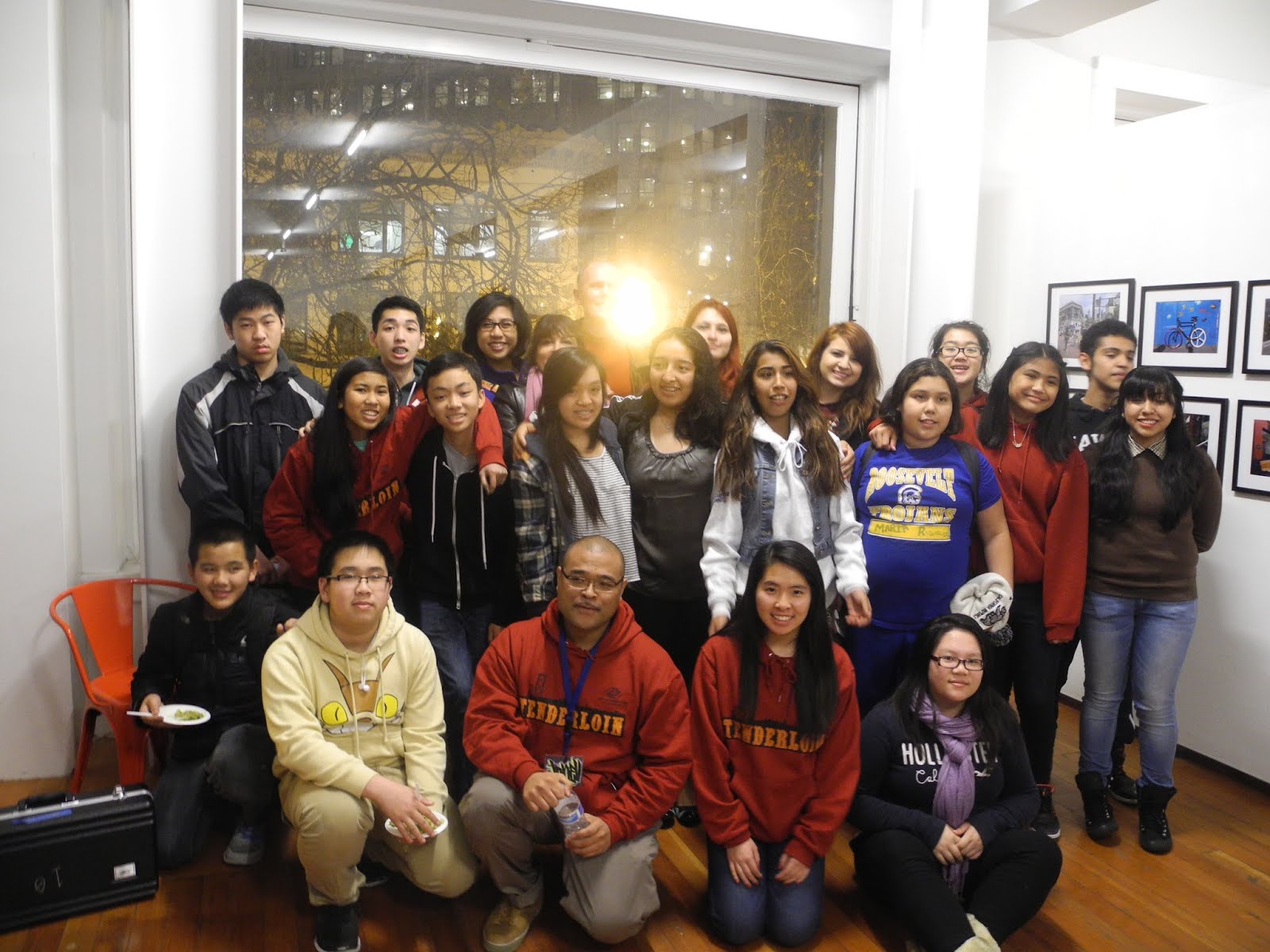
Here is a second “Principal Truth”: the critical need for Civic Placemaking.  Let’s take a look at where the Tenderloin is from this satellite photo:
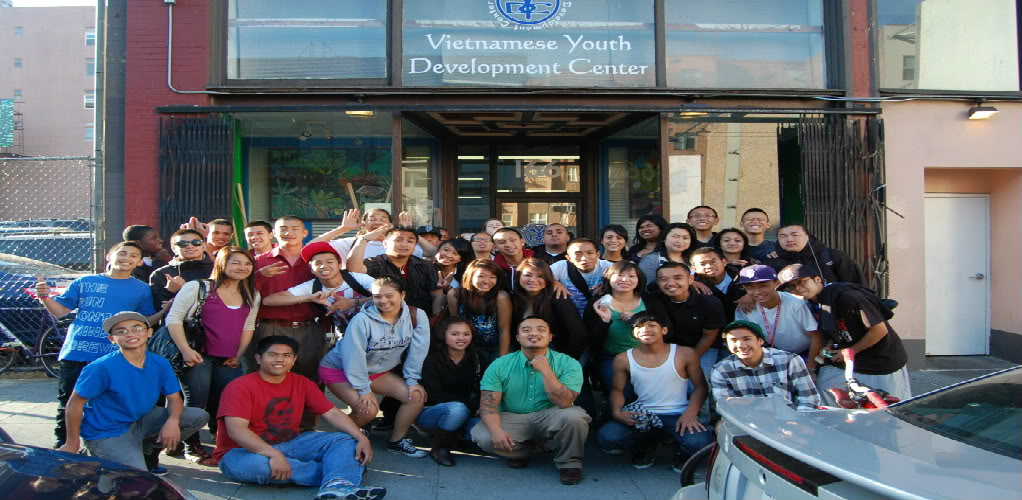
satellite shot

The Tenderloin is a very low-income/extreme poverty community with a very extensive inventory of protected affordable housing surrounded by some of the most expensive real estate in the country.  Over the past two years several of the biggest names in tech and related industries have moved in with thousands of new residential units for higher income households under construction.  Opinions vary on whether these new additions to the local landscape are positive or not; personally I think their arrival offers a fantastic opportunity to do inclusive, diverse city building.
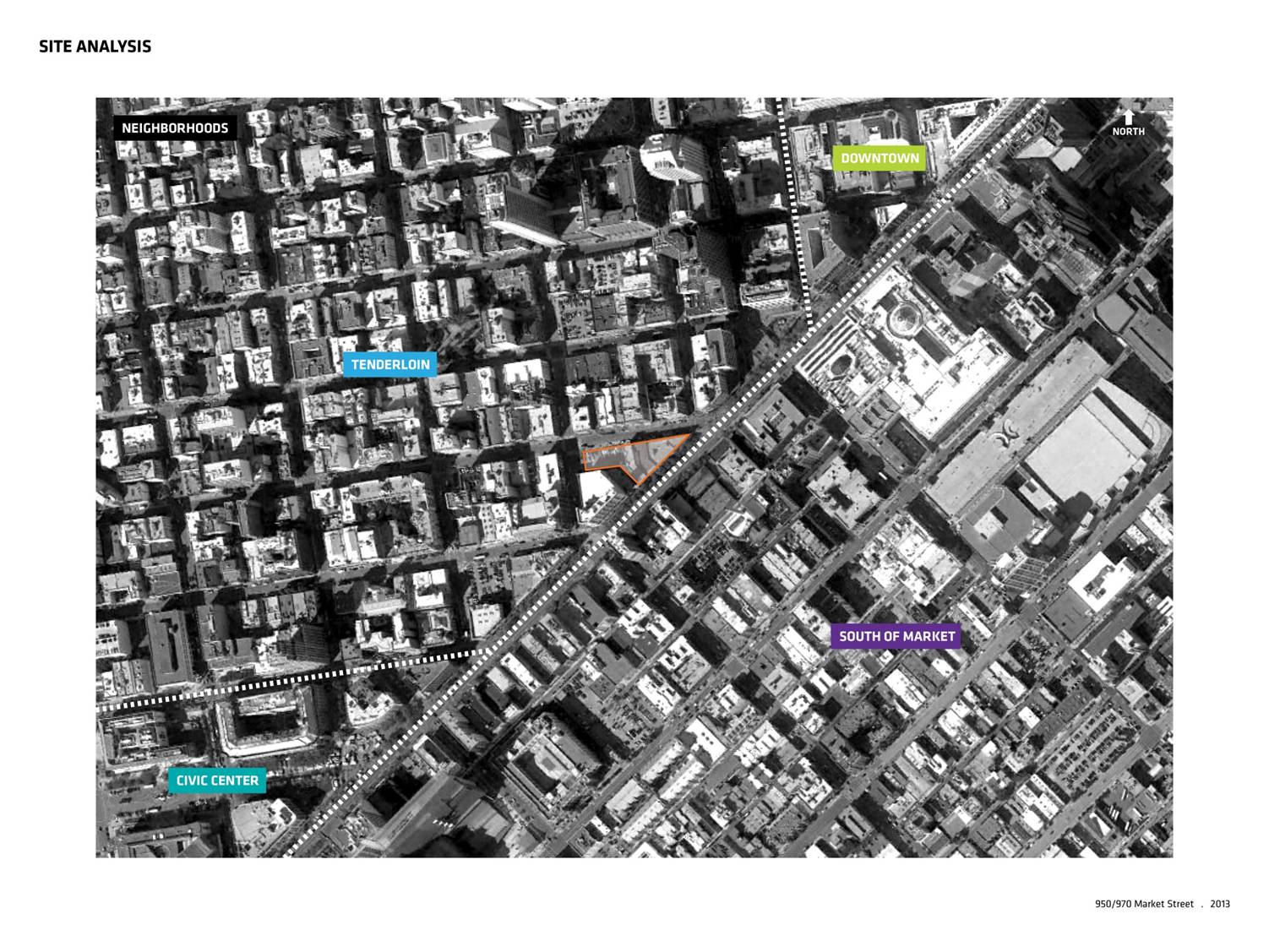
The site of the 950 Center is smack in the middle of it all.  The Center, part of the exciting mixed-use development 950-974 Market, is at a supremely visible and accessible location where these very divergent worlds collide.   This is what makes it an especially important site to build bridges through the arts.   Indeed, placemaking through the arts is more vital than ever for the future of the Tenderloin & mid-Market.

Do places still matter in the digital age?  Here in New York City I remember as a kid taking the subway from arson-plagued East New York Brooklyn to Columbia University in Upper Manhattan.  I loved looking at the grand stairs leading up to the majestic library; I could feel and was inspired by the presence and power of it.   The same was true during visits to Grand Army Plaza in Brooklyn, home of the Brooklyn Central Library and the Soldiers’ and Sailors’ Arch.   The great libraries.  The farmers markets, art centers and other great civic meetings places.  Perhaps more than ever in the face of the atomization of civic engagement we need places that can build and hold together our civic fabric, places that can bring us together and inspire.

950 is in part an attempt to solve the problem of increasing social stratification, the gulf between peoples.  On this point it would appear that New York City and San Francisco have a great deal in common as both cities face one of the most pressing challenges of our time: the great but inequitable creation of wealth, otherwise known as the disappearance of our middle class.  In both cities the bridge building, placemaking power of the arts can offer one powerful solution, with the benefits realized by everyone.  As my friend Nan Keeton, Director of External Affairs at the San Francisco Symphony, insightfully observed, 950 is not just for the Tenderloin’s disadvantaged; all of San Francisco needs 950 and projects like it.

I think Nan is right. We should expand the question of sustainability to go beyond the arts; we must contextualize the arts as part of the urgent question of the sustainability of our cities for all of its citizenry.

Do No Harm, Revisited

We never finished addressing the advice/request of Do No Harm.  In the end, how do you discern what it means to Do No Harm?  When does it mean we mustn’t disturb the status quo?  When does it mean we must take action to not lose a truly rare and important opportunity?   Each community’s circumstance will differ.  Each organization, staff and board needs, capacities and visions will differ.  Our obligation to them as constituents we serve is to offer the best information possible in order for them to make responsible, informed decisions for their future.  Check your blind spots.  Incorporate regular sobriety check-points.  We have to balance, with one hand, the inspiration and passion that drive us to do this vitally important work with, on the other hand, an unsympathetic, calculating analysis of what is feasible and sustainable.

So, congratulations on your 5 year lease.  That said, 5 years is a blink of the eye.  If you have 5 years left on your lease without any plans on what happens after you are already in a very compromised position.   Think ten years out at a minimum.   Begin your sustainability planning now.  And remember your principal truths, you’re going to need them.

Mid-Market Moment of Truth

KQED story on 950 & the future of mid-Market Arts

KQED’s Cy Musiker aired a piece last week critical to the city’s future: San Francisco Artistic Community Wants a Piece of Mid-Market. There’s good news!  Supervisor Jane Kim, a big art and education advocate, is working on a special-use district to incentivize mid-Market developers to build permanently affordable space for art and education.  Effective incentives could tip the scale at several mid-Market sites.

At present, outstanding education groups interested in locating @ the 950 Center for Art & Education – Youth Speaks, Blue Bear Music, All Stars Project and Women’s Audio Mission – would owe the city nearly a million dollars in “impact” fees in order to revitalize three devastated blocks of blighted buildings, build the Center and bring their programming to at-risk Tenderloin youth.  Clearly this does not make sense, particularly with the backdrop of a wealthy city reaping huge revenues from a surging tech-driven economy and booming real estate market.

Technically, of course, it is the groups’ funders that would owe the city for the “impact” of revitalizing three devastated blocks. Wouldn’t it be better if we could instead direct these resources to endow a 950 Scholarship Fund for low-income Tenderloin residents?  Or endow an operating reserve to help our small non-profit groups get stabilized over the first few years?

From Cy Musiker’s report: A few officials are listening, though. Supervisor Jane Kim represents Mid-Market, and she’s working on a measure to create an arts special-use district that would reduce developer fees on space reserved for nonprofits arts. It’s the kind of break that could help a Mid-Market arts company like Alonzo King’s LINES Ballet, which rehearses in a building without heat or hot water.

Many hope this effort from a determined art & education-friendly supervisor, combined with the hoped-for leadership from our mayor, will give the Tenderloin a fighting chance for a measure of still-elusive equitable development (or at least heat and hot water!) in the face of the historic tech and real estate booms.

UC Berkeley is Reimagining the Urban

Interested in discussing the exciting Special Use District and/or mid-Market equitable development through the arts?  Come to UC Berkeley on Monday, September 30th for Reimagining the Urban: Bay Area Connections Across the Arts & Public Space.  I’ll be there speaking about 950 and mid-Market equitable development through the arts.  Produced by UC Berkeley, the Arts Research Center and the Global Urban Humanities Initiative, the symposium is free to the public.  From the website: Reimaging the Urban is a daylong symposium examining art, nature, economic development and equity in the Bay Area metropolis. Artists, curators, real estate developers, environmentalists and social justice advocates will gather to discuss the uses and abuses of the region’s creative and natural resources.

Cutting Ball 2013 – 2014 Season begins

Our cutting-edge Cutting Ball Theater friends on Taylor Street open their 2013 – 2014 Season with Sidewinders, recently awarded the Rella Lossy Playright Award.  Get your tickets HERE!

PianoFight Art Entrepreneurs

A couple of years back, at a Tenderloin Arts Advisory meeting, I was happy to introduce PianoFight directors Rob Ready and Dan Fink to the Duggan Family of Original Joe’s fame.  An amazing collaboration resulted, and the PianoFight team is now near completion of a remarkable renovation of the iconic Original Joe’s space on Taylor Street into a theater and cabaret venue. They’re looking for a few good investors!  Learn more at PianoFight.

HeART of Market

Some of the best community development starts with community outreach and ends with dancing!  Come see LINES Ballet dancers on the floor with kids from the wonderful Tenderloin Boys & Girls Club and De Marillac Academy at the HeArt of Market on Saturday, October 5th, 12 – 3 pm @ Mint Plaza.  For more information: LINES Ballet Dance Center News/Events.

freespace

I had the opportunity to visit freespace; a fantastic and daring approach to creating a new kind of civic commons for creative expression and dialogue.  I left thinking that perhaps I saw a glimpse of one possible, promising future of how and where we will interact in the public realm.  To learn more check-in with freespace advocate iLana Lipsett and visionary social entrepreneur Mike Zuckerman.

Charlie Rose & The Luggage Store Gallery

A few weeks back Charlie Rose had a great segment on “Iran Modern” at the Asia Society.   He closed with this observation:”Art is a reflection of a society, its culture. where society is, where it’s been and where it might be going.”  Looking at Osmegeos’ stunning new mural above the Luggage Store Gallery, we can experience a reprieve, a respite from the pressures of the battle against a polarized mid-Market future.  We can find a reminder that the Luggage Store has been a Tenderloin/mid-Market sanctuary for peace and understanding through the arts for over two decades.  Where our neighborhood and city might be going amidst great pressures remains uncertain, but if we’re smart we’ll support places like the Luggage Store to create places where we can all meet.